
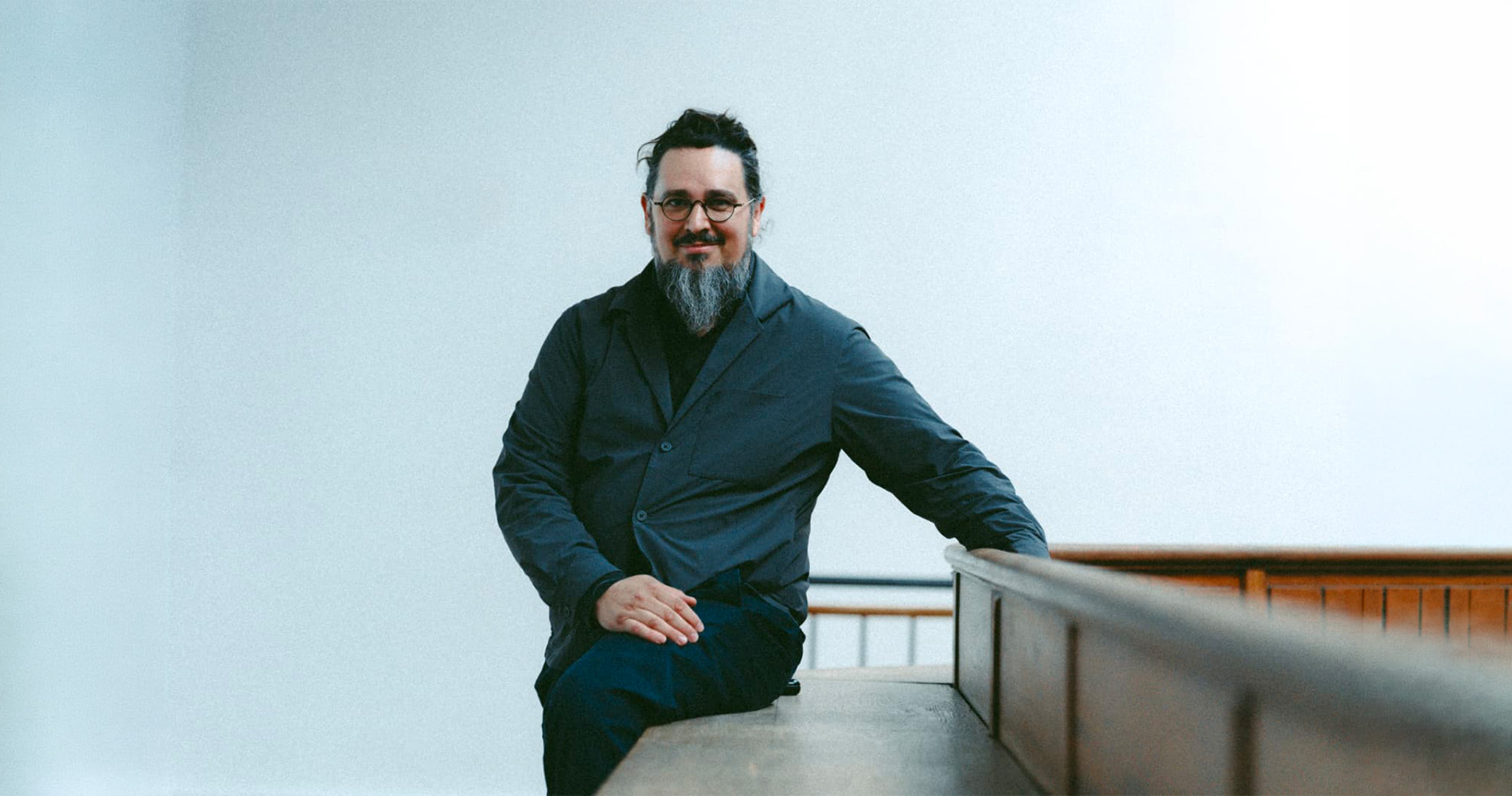
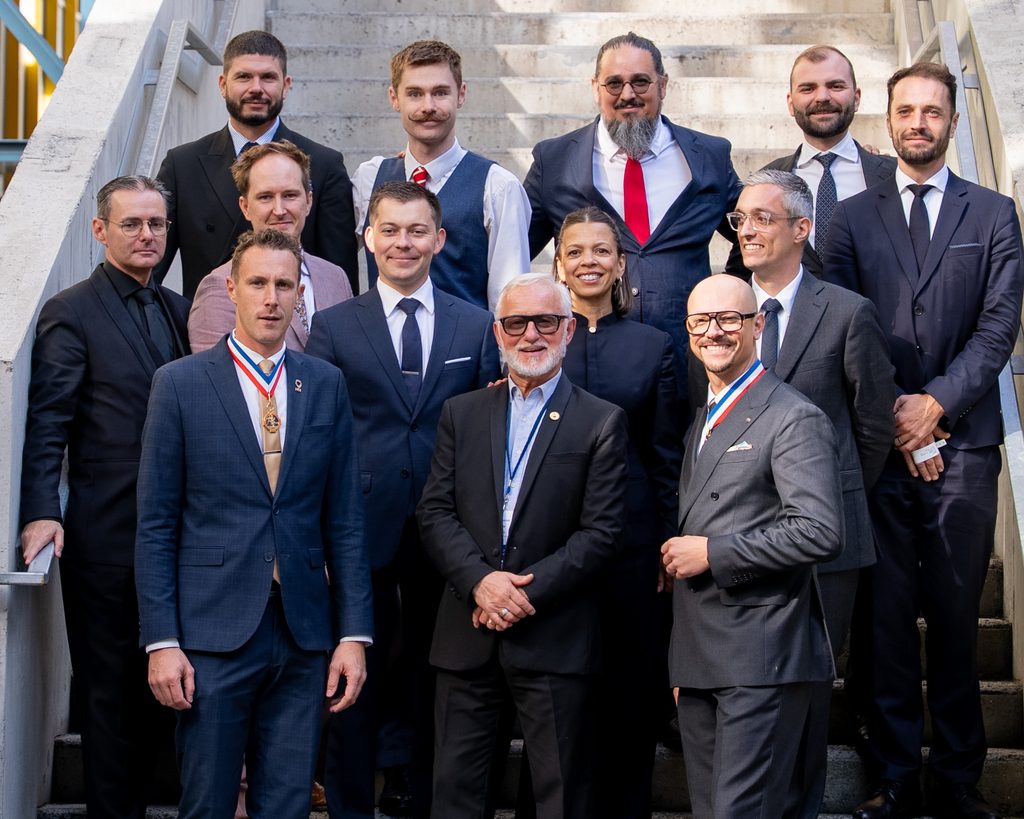
On Thursday, October 8, 2026, at the International Hotel School of Lille, René Delvincourt announced a single name for the Bartender-Barmaid class: Lucas Gacitua-Petit. Out of ten finalists, he is the sole winner of this year’s “Un des Meilleurs Ouvriers de France” competition. For the Strasbourg native, it’s the third attempt, after qualifying in 2018 and reaching the final in 2022.
We called him the next day, barely back home. Not yet fully recovered from his emotions, he looks back with us on twenty years behind the bar, on what he changed after his setback, and takes us behind the scenes of a final where usually only the group photo is seen. On the agenda: an Espresso Martini presented in three eras, ice blocks to carve, a setup completed one second before the gong, and a DeLorean.
Lucas, first of all, how are you feeling today?
(Laughter) For now, I’m still a bit in another dimension. I’m starting to realize what happened. I think you never expect it, even when you’ve prepared for it and done everything to make it go well. It’s a shock, a very positive shock, but a shock nonetheless. So I’m still processing the information, and we’ll see next week what we make of it.
For those who don’t know you yet, can you introduce yourself?
I’ve been based in Strasbourg for quite a few years, and I’ve been in the bar industry for about twenty years. A little over fifteen years ago, I spent a year and a half, two years in Berlin, which really gave me a boost. I returned to Strasbourg in 2010 and worked in several historic establishments. We were at the very beginning of the cocktail scene here, right at the start, and with a nice community of bartenders, we tried to move things forward.
I created my consulting company, Prohibited Bartending, eleven or twelve years ago. I confess that since yesterday, the dates are a bit hazy! (Laughter) I had the chance to participate in the creation of AEDAEN Speakeasy, with whom I still work a bit. Since then, I’ve supported other establishments, notably last year Madame C and Brio, a lovely hotel bar. In parallel, I’ve been a trainer for the bar trade specialty certificate for a little over ten years, and for a few years now, I’ve been supporting the Trophées du Bar (Bar Trophies).
Regarding my background, I’m self-taught. I did something completely different at the beginning. The bar was a student job, and at some point, it took a different turn.
Is that where it all started, in Berlin?
My very first bar job was in a student bar in Strasbourg. I discovered one aspect of it, but I was very young and it was mostly the festive side that took over. The profession as we understand it today, I discovered in Berlin, in a beautiful establishment. Then it continued in Strasbourg.
What made you switch to this profession?
Simply, by chance encounters. I was thinking about it this morning in the car on the way back from Lille: my journey is made up of people who pushed and supported me. First, a friend in Berlin, the first to encourage me in this direction. Then my head bartender when I returned to Strasbourg, Stanislav Serpinin, who competed more than fifteen years ago and is now in sales. It’s these people who made me want to make it my profession.
Has teaching changed the way you practice, and how you approach the MOF?
That’s for sure. Teaching, there too, happened by chance. Since it’s a passion profession, I immersed myself in it, I bought books. Participating in this training forced me to delve deeper, to search for sources and documentary material so as not to tell my students just anything.
And in the competition, the transmission aspect is essential. We spent two days with assistants who participated in everything. Mine was named Éliott and he did remarkable work. I don’t know if he realizes how important it was. Being in contact with aspiring young bartenders every week inevitably changes one’s perspective. It’s not a prerequisite for this competition, and I don’t have a typical teacher profile. But I gain a lot from it.
In 2023, you won the world final of the Rémy Martin Bartender Talent Academy. How is a brand competition different from a state examination like the MOF?
It’s not the same pressure. Rémy Martin was a great experience, with a good team and a house that put us in very good conditions for this world final. But they are two different worlds. There are still links: I’ve done many competitions, and I’ve lost plenty. The vast majority, in fact! (Laughs) Even for the MOF, it’s my third participation.
The third?
It’s my second final. My first qualification was for the 2018 session, if I’m not mistaken. I went in with total audacity, but it allowed me to discover how it worked. Then, for the 2022 session, the one where Jérémy Lauilhé won the title, I had the chance to be in the final. It didn’t work out, and initially, I wasn’t sure I wanted to try again. In retrospect, I think I made the right choice! (Laughs)
Brand competitions familiarized me with stress, working under pressure. It’s not the same stress as the MOF, but it contributes. In our profession, participating in competitions allows you to progress, to challenge yourself against others, to meet them. It has always been important to me.
What did the 2022 failure teach you?
Many things, and at the same time, it’s quite vague. I don’t know all the causes of my failure. I know what I was able to analyze: technical errors, choices that weren’t the right ones. With certainty, in fact! (Laughs) The goal was not to persist in a direction that hadn’t worked and to seek another approach. It’s hard to pinpoint it right after. We had our heads down for a long time.
When did you decide to try again, and how much preparation time this time?
I think that, in reality, my preparation started when I seriously approached the bar. Everything I did there was nourished by what I had done before: the encounters, the books, the podcasts, the articles on the history of bars and what everyone else is doing.
When registrations opened, it made me question things. It’s never easy, after a failure, to tell yourself you’re starting over. But there was a challenge aspect, I didn’t want to be left wanting more. And until the minute René said my name, not once did I think ‘I’ve got it’.
The concrete part started at the beginning of the year. As soon as we knew the date of the qualifiers, in May, everything moved very quickly. Then there was a blank during the summer: we had the results, but not yet the details of the final. I took the opportunity to analyze the previous final. I spent several months replaying the film minute by minute, asking myself each time if it was the right choice. And I tried to do things differently for the most part. If it hadn’t worked out, it meant there were errors on the left, right, in the middle.
With Jérémy Lauilhé, you approached the competition very differently to achieve the same result.
The big difference is that Jérémy got the title on his first attempt. He worked towards a goal that he achieved directly. I, on the other hand, took a few detours! (Laughter) We don’t have the same journey either. For me, the MOF appeared one day as a challenge. And once you’ve had a taste of it, you want to go back and succeed.
What was the theme of the final?
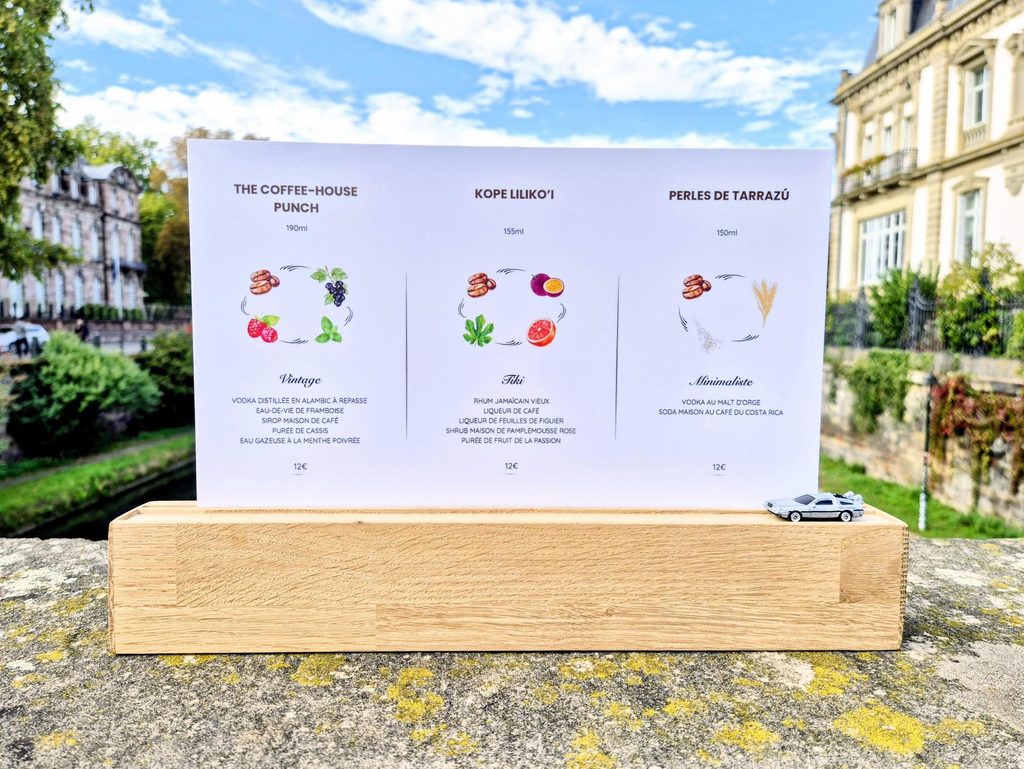
Starting from a classic, internationally recognized short drink, freely chosen. And reinterpreting it into three long drinks, over three historical periods:
- a vintage cocktail, generally from before 1900;
- a tiki cocktail, from the heart of the 20th century;
- a minimalist, and therefore contemporary, cocktail.
With three imposed homemade products: a syrup, a shrub, and a carbonated product, which were freely distributed among the cocktails.
Your reaction upon discovering it?
`Cool.` This summer, I had deliberately avoided preparing recipes, as I had no way to anticipate. And I wouldn’t have imagined that. The history of cocktails has always interested me, so it was an opportunity to delve deeper.
After that, we had to find the cocktail. I spent hours with my wife looking for the right approach. An ultra-known classic, or on the contrary, an original classic to stand out? We decided that it had to be a cocktail everyone knows. And I’ve always had a fondness for coffee, especially specialty coffee. There’s a very popular cocktail right now, it’s no secret: the Espresso Martini.
I told myself that if we found coffee in long drinks that didn’t resemble an Espresso Martini at all, people might wonder: `Wait, isn’t the reference the Espresso Martini?` Especially since I didn’t know what level of information the jury would have during tasting. I still don’t know if they had the info, by the way! (Laughs) Coffee provided a strong marker around which to build.
You speak of it with humility, but these cocktails didn’t just create themselves.
No, and I’m happy about that. I’m lucky to be surrounded here by quality roasters who supported me. It doesn’t happen alone; it’s an entire ecosystem that we mobilize. The challenge was to please many different profiles without knowing who would be tasting them. The brief specified that the cocktails would be served at a professional event, so to people with a background in cocktail culture. We could go beyond the very general public, while remaining accessible.
Then, a lot of trials. Many, many trials. (Laughs) Even when the menus were already printed, I still adjusted dosages because one element deserved to be a little more prominent. Up until the last moment I could change something, I changed something.
The trials remain quite opaque to the public. Tell us about these two days in Lille.
Wednesday morning, the setup. This was the very first trial, with an assistant: 35 minutes to create our three homemade products, « and more if you like ». (Laughs) Given the timing, I thought three was perfectly fine. During practice, it was easy. Here, I finished at 34 minutes and 59 seconds. The last minute passed at a stratospheric speed, and I placed my last two bottles just as the timer was about to ring. In the end, it was the hardest trial for me, and it wasn’t the one I expected.
Then, a surprise oral presentation. We only knew we would have 10 minutes on a product. We had spent hours speculating among ourselves. The topic: a team briefing on clarified products. Explain what they are, and how to present them to the client.
The afternoon, the mystery basket. 45 minutes to produce a cocktail, with no other information. At the start, we were told that the challenge also included ice carving. Large blocks of clear ice and the equipment to work with them were placed in front of us. I don’t do it daily anymore; today, companies deliver pre-portioned ice, but I had done it before. I spent my 45 minutes carving to produce four identical ice cubes. So it was my assistant who made the cocktail, following my instructions. It was very good, by the way. It’s important to realize: these young people from the Lille hotel school, and two from an establishment near Saint-Omer, had started their school year in early September. A little over a month into school, and their work counted towards the final result.
Thursday morning, the service. This was the event I dreaded the most. Lounge format, “high traffic,” 10 minutes to send out between one and four copies of each cocktail, without knowing the number or the order of the orders. Like in a real bar, except people are watching and evaluating you. I went first, around 9 AM. We had a rather daring jury to taste cocktails at that hour! (Laughter) A lot happened in the last minute, but I got all the cocktails out. This was the only time we were 100% “behind the bar,” behind a counter.
In parallel, the defense. A fifteen-minute presentation of the menu concept, followed by a Q&A with the jury.
What approach did you take to present your work?
Since we were working on different historical periods, we embarked on a journey through time. To discreetly illustrate the menu, I used Back to the Future. The Espresso Martini is from the early 1980s, and Back to the Future is from 1985. We put a lot of pressure on ourselves, we work tremendously, so we needed a bit of fun to lighten the atmosphere. On the menu, a small DeLorean allows you to travel from one cocktail to another.
You are the only laureate in your class this year. How did you experience the announcement?
It’s strange. The Bartender class was called first. While waiting for René to announce the results, all ten of us were together, after two very intense and emotionally charged days. It was a very powerful moment. And to find myself alone on stage, that feels strange.
I’m not hiding my delight; I’m very happy that it worked out. But if there could have been two of us, I would have been just as pleased. That’s the beauty of this competition: we’re not competing against each other. There can be one, two, or three winners. The sommeliers and maître d’s were two, and the chefs were an army of thirteen! (Laughter) It was also great to experience it with all these professions gathered together, with an announcement at the end of the day. I believe it’s a first.
What is your philosophy on cocktail service?
Phew, it would take me more than 10 minutes to explain all that! (Laughter) In a nutshell: cocktails are about pleasure and sharing. The goal is to create a drink that people will share among themselves, or with us. It’s a human profession, and I hope there’s nothing selfish about it. It’s about giving a little joy to our guests, regardless of the establishment, and that applies to any drink served at the bar. To take people out of a daily routine that isn’t always very joyful right now, and to be the vehicle for that.
For you, a good bartender is someone who…
(Laughter) Do you have any easy questions? It’s someone who wants to give the people in front of them a good time. I say clients, but I should say guests. The English term ‘guest’ puts the focus back where it belongs for me.
How do you see what’s next?
That’s everything that remains to be built. Beyond the joy, the first thing we feel is a responsibility. We are called to embody our profession, and all those who bring it to life: distillers, liqueur makers, fruit and vegetable producers, all the artisans who support us. Just for preparing this final, I think of all the people who were involved. We don’t live alone; we are part of an ecosystem of talents, and I will try to promote this French savoir-faire. I have a chauvinistic side; we have extraordinary Alsatian artisans, so I’m going to highlight them. But not only them! (Laughter)
And then continue the transmission, a fundamental value of the competition. We have young people involved in training, others who are going to get involved, and we have only one desire: to give them as many keys as possible.
A clarification, out of respect for those who passed it before me: for now, I am a laureate of the competition. I will be Meilleur Ouvrier de France the day I receive the diploma and the medal, in 2027. It’s perhaps at that moment that one will truly feel the weight of things.
