
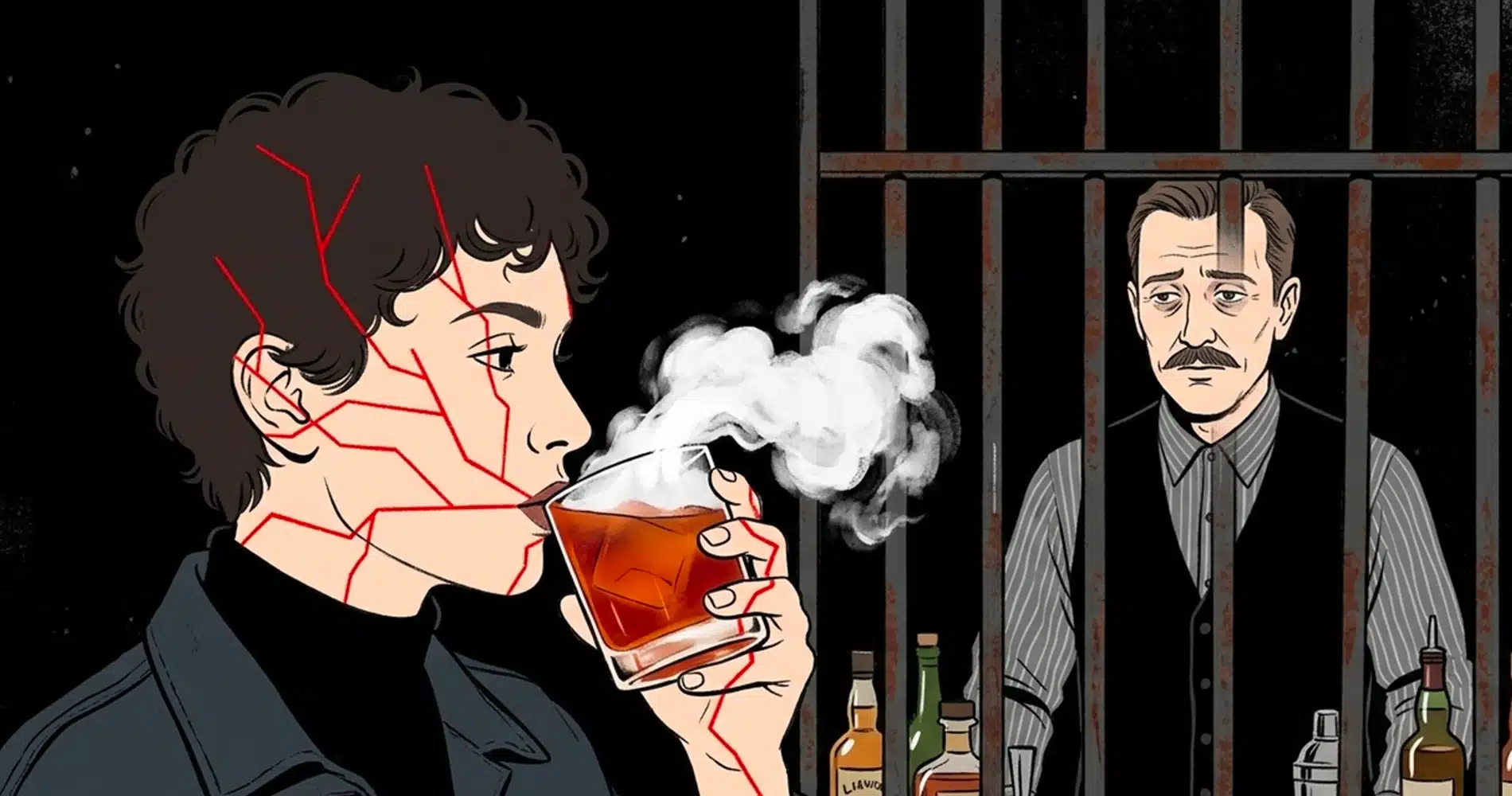
Dry ice is the stuff that makes for crazy photos and Instagram stories that are on fire. But behind the spectacular fog, there’s a real, tangible, and potentially deadly risk. An informal chat with Nicolas from Parlons Cocktail (who was denouncing the lack of knowledge on the subject) made us want to go further and find out what really happens if, one day, the experience goes wrong: a customer ingests dry ice in a glass (a piece not yet sublimated), served too early or poorly dosed, and it becomes fatal.
We tend to see dry ice as a cool gadget, a scenographic tool to make a cocktail Instagrammable. Mysterious mist, dramatic effect, guaranteed likes. But it’s not a toy. And if you use it behind your bar, you’re playing with something that can kill, and that can destroy you professionally AND legally.
So, a case study. What really happens if someone dies after ingesting dry ice in a cocktail served in your bar?
What dry ice does to a human body
Before the legal aspect, the science. Because understanding the danger is fundamental.
Dry ice is solid CO₂. Its surface temperature is -78.5°C. It doesn’t melt; it sublimates directly into gas. This is precisely what creates the fog effect everyone loves.
In a glass, it is used to create this visual effect. The problem: if a piece, even a small one, is not entirely sublimated at the moment the customer drinks, it can be ingested.
What happens next is brutal:
- Contact with the oral mucosa and esophagus: immediate cryogenic burns at -78°C. Cellular tissue is literally destroyed by extreme cold.
- Arrival in the stomach: solid CO₂ violently sublimes into gas in a confined space. Intra-gastric pressure skyrockets. The result can be gastric perforation: the stomach wall gives way under pressure.
- Immediate aftermath: peritonitis (contamination of the abdominal cavity), shock, internal bleeding. Without ultra-rapid emergency surgery, life is in danger within minutes.
Real cases exist. In 2012 in Newcastle (United Kingdom), an 18-year-old woman, Gaby Scanlon, had to undergo a total gastrectomy (removal of the stomach) after ingesting a cocktail containing liquid nitrogen, a similar physical principle. She survived, but was permanently maimed. Other cases with dry ice have been documented, with fatal outcomes.
The Bartender: From Accident to Criminal Prosecution
We’re getting into the serious stuff now. Because “it wasn’t intentional” is not a sufficient defense in French law.
Involuntary Manslaughter: The Main Threat
Article 221-6 of the French Penal Code defines involuntary manslaughter, which is causing the death of another person through carelessness, recklessness, inattention, negligence, or failure to comply with a duty of care or safety.
Base penalty: 3 years imprisonment and a €45,000 fine.
For a bar professional, it becomes even more complicated. The law provides for an aggravating circumstance when there is a clearly deliberate violation of a specific duty of care or safety imposed by law or regulation.
In this case: 5 years and €75,000.
A bartender who uses dry ice without a safety protocol, without documented training, without verifying that the served drink no longer contains solid pieces, precisely fits this profile. Professional negligence in an establishment open to the public is fertile ground for this aggravated charge.
Involuntary injuries too
Even if the victim survives but remains disabled (organ removal, permanent sequelae): involuntary injuries with permanent incapacity. Up to 3 years imprisonment and €45,000, potentially aggravated according to the same criteria.
Civil liability in parallel
In addition to criminal proceedings, the victim’s family can file a civil claim for damages. Damages awarded in cases of death include: emotional distress of loved ones, loss of income, and loss of companionship. Awards can easily reach several hundred thousand euros.
The Bar Manager: Don’t Think You’re Safe Because You Weren’t Behind the Bar
This is the classic mistake. “The bartender messed up, not me.” False. Dangerous reasoning.
The Manager’s Criminal Liability
Under French law, the manager of an establishment, whether it’s a bar, restaurant, or hotel, is personally responsible for the safety of people in their establishment. This is the principle of delegation of powers: if no formal safety delegation has been established, responsibility reverts to the manager.
They can be prosecuted for:
- Involuntary manslaughter (same laws as above) if it is proven that they did not implement safety procedures, did not train their team, or did not prohibit or supervise the use of dangerous products.
- Breach of employer’s obligations regarding occupational health and safety (Articles L4121-1 et seq. of the Labor Code): the manager has a legal obligation to train their employees on the risks associated with their tools.
- Willful endangerment of others (Article 223-1 of the Penal Code) if it is established that they knew dry ice was being used without a protocol and did nothing: 1 year and €15,000 fine.
Administrative and professional consequences
Beyond criminal charges: the administrative closure of the establishment is a measure that the prefect can impose immediately, for the duration of the investigation. In the event of a customer’s death, this is almost systematic.
The liquor license can be suspended or revoked. This means economic ruin for the establishment.
Professional insurance may refuse coverage if the use of a dangerous product without an established protocol constitutes intentional misconduct or gross negligence. The manager then finds themselves personally exposed to civil lawsuits.
What this concretely implies if you use dry ice
It’s not “stop using it”: it’s “use it correctly or don’t touch it.” The minimum professional rules if you want to stay within the law:
1. Never serve a drink until the dry ice has completely sublimated. It must have visually disappeared before the glass is sent to the dining room. This is not optional.
2. Use exclusively certified food-grade dry ice, and not technical ice (used for industrial refrigeration, potentially contaminated).
3. Handle with cryogenic gloves, and train your team in this practice. Direct contact with dry ice causes instant burns.
4. Never use dry ice in a closed container (mug, cocktail glass with a lid, shaker): the CO₂ pressure can cause the container to burst.
5. Document your procedure. A written, signed, and kept protocol. If something goes wrong, this document can make the difference between gross negligence and professional diligence.
6. Officially train your team, with written records. Not just a “look how I do it.” A session, a report, a signature.
In summary: the “wow factor” is not worth your freedom
Dry ice in a cocktail creates a spectacular effect. But it is also a product classified as dangerous, regulated, and requiring strictly professional use.
A customer dies in your bar after ingesting a piece of dry ice, this means:
- An almost certain criminal proceeding, for the bartender and for the manager.
- A probable administrative closure.
- Civil liability that could reach several hundred thousand euros.
- The end of a career, or even a prison sentence.
I hope this article finds its place, and that we stop seeing nonsense before an incident teaches us in a much more painful way.
Are you using dry ice in your establishment? Tell me in the comments how you manage the protocol, or if you think the profession is sufficiently aware of this issue.
