Story. Three days in the birthplace of Marie Brizard to follow the 11th French final of The Bartenders Society competition and present a trophy.
There’s a moment in every competition when you realize things are getting serious. This year, it happened on a Sunday evening, on the rooftop of the Indigo hotel in Les Chartrons, while everyone still thought it was just a party.
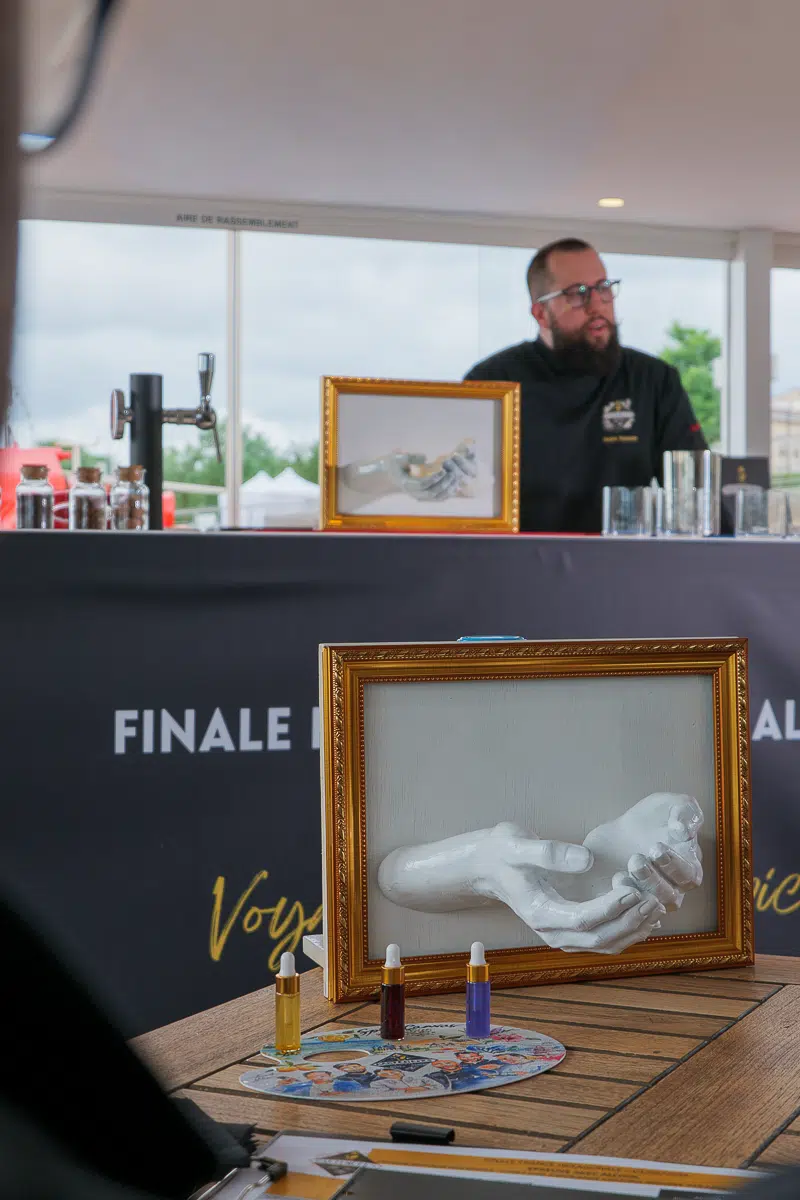
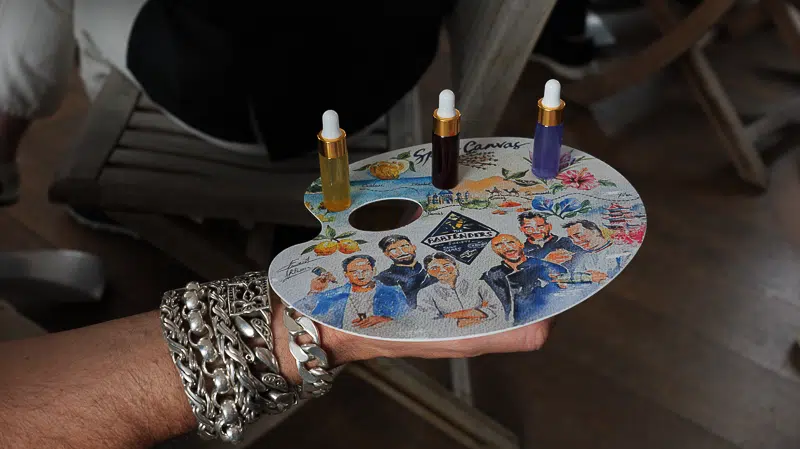
The Welcome Party set the right tone: glasses in hand, reunions with all the previous winners, relaxed candidates. Then ten black boxes appeared. The ten finalists opened them at the same time, and the atmosphere subtly shifted. Inside: a “spice hunter” kit, bottles, a selection of mandatory spices, and a notebook, more precisely a “passport,” to jot down ideas. The non-alcoholic challenge with Caraïbos had just begun, without warning. 1.5 hours to invent a recipe. The coaches, all former winners, could guide the thinking; the interpretation, however, remained the candidate’s responsibility.
We were there from beginning to end, and let’s be clear from the start: this edition was played out as much on the table as in the stories the candidates had to tell. The spice theme wasn’t just decorative. It was a language, and they had to know how to speak it.
Bordeaux, the ideal playground
The choice of city was no accident. Bordeaux is the birthplace of Marie Brizard, a house founded here in 1755. For an 11th edition focused on taste and transmission, it was hard to find a more fitting setting.
Monday’s program quickly set the pace. The first major challenge came in the morning: the presentation of the qualifying cocktail, this time with Marie Brizard, Saint James, and Caraïbos, aboard the Maddalena, a docked boat transformed into a floating stage. Then came a lunch cruise on the Sicambre, and there, a real highlight: a masterclass given by two chefs, Matthias Giroud, jury president and co-founder of L’Alchimiste, and Mélanie Serre, chef and owner of Auberge du Bassin. Their subject, “Mixonomie”, where mixology meets gastronomy, could have remained a slogan. It was a true demonstration of pairing, the dialogue between textures and flavors treated as a conversation, not a sales pitch.
In the afternoon, we returned to solid ground at the Café Maritime for the unveiling of the alcohol-free creations imagined the day before. At the end of the day, a masterclass on spices with Benoît Aubé, spice selector at Sacré Français, served to remind the finalists that behind every berry lies an origin, a route, an aromatic power. A common thread maintained throughout.
Benoît Bouillard, or patience rewarded
The ceremony was held in the evening at the InterContinental, and the results alone tell a great story.
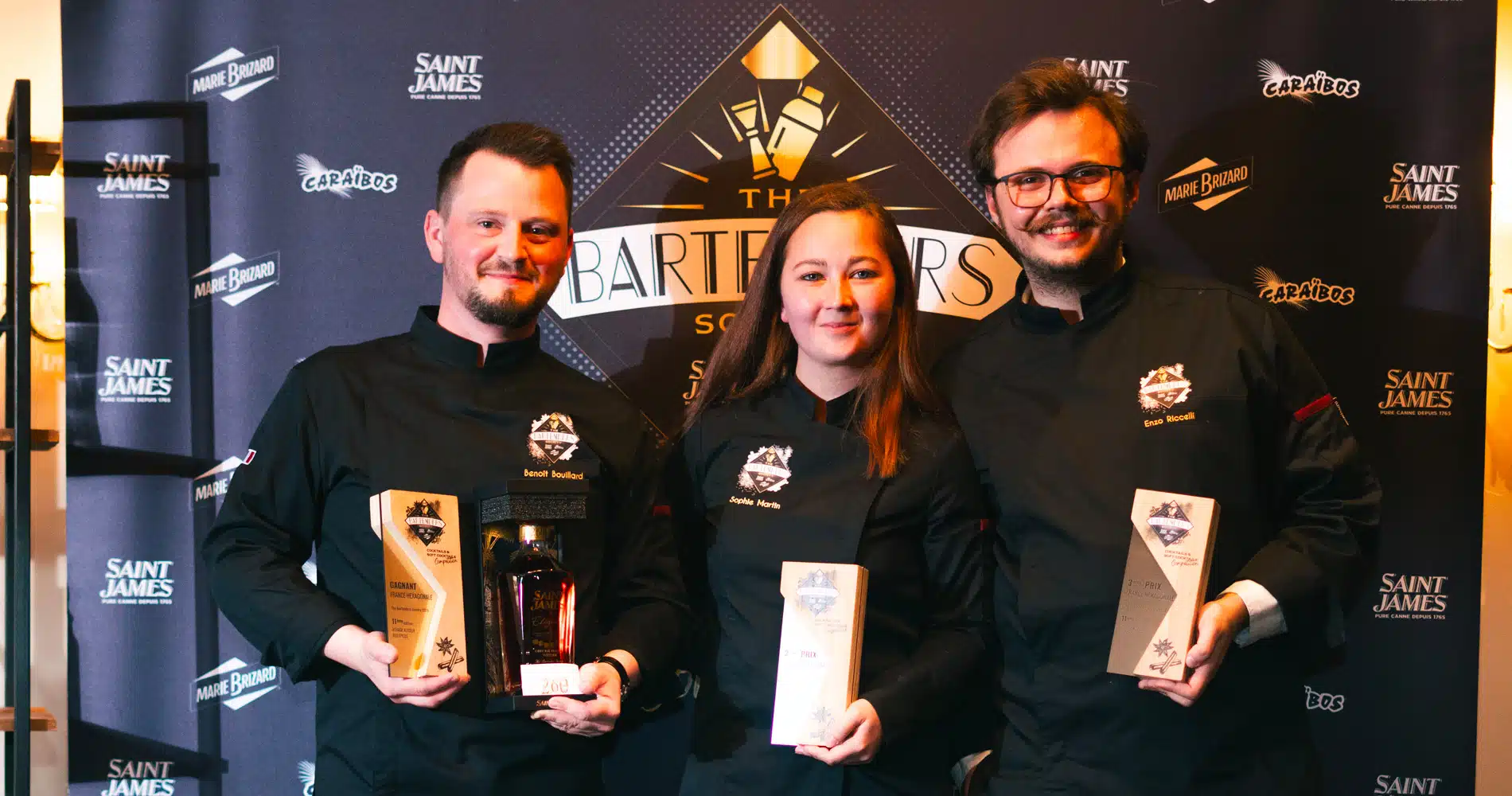
The 2026 Hexagonal France winner is Benoît Bouillard, and his journey deserves attention. Already a France winner in 2023, and second last year by a hair’s breadth from the international competition, he re-entered. Again. To go through the France final stage, like everyone else, including former winners. This is what makes his victory interesting: he had already won, he could have been content, he chose to put everything back on the line to go for the international final that he was missing.
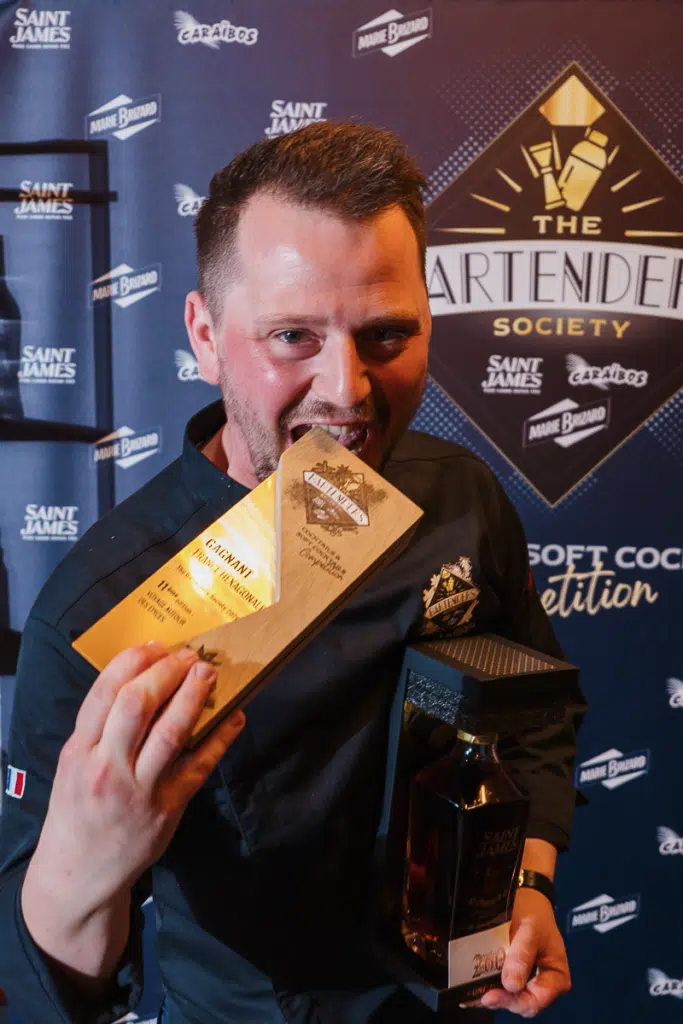
This year, he returned with two very personal creations. On the alcoholic side, “Reine Marie” pays homage to spice as a language and to Marie Brizard as a figure. Madagascar vanilla on William’s pear, rinsed with Saint James Cane Flower and black cardamom, toasted mustard seed infused in Cocchi Americano, strawberry-ginger foam to finish. The spice never dominates: it circulates. This was precisely the point of the competition, and no one embodied it better. On the non-alcoholic side, “Echo” starts with a simple idea carried through to the end: ingredients that don’t resemble each other but understand each other. Caraïbos cranberry juice infused with kaffir lime, Timut berry distillate with grapefruit zest notes, verjuice to connect, saline solution with basil to reveal. An aromatic circle that closes without fuss.
The rest of the podium
Sophie Martin (La Ferme Blanche, Lompret) secures 2nd place for her second participation only, and her first podium. With « Zeste Épique », she creates a crossing between smoked black tea, fenugreek, sumac, and ginger, where citrus fruits bring depth. Her non-alcoholic creation, « Kamilibos », is a direct homage to a Bangladeshi colleague: distillate of Assam berry, pandan cordial, cinnamon leaf. Two creations that speak of cuisine and encounters as much as technique.
Enzo Riccelli (Santeuil Café, Nantes) completes the podium in 3rd place for a remarkable first participation. Coming from an establishment that has already produced two winners (Mathieu Gouret, Benoît Guérin), he embraces his lineage while establishing his own universe. « Mémoire d’Épices » maps his journey (Saint James VSOP and Cœur de Chauffe, peppered yuzu with Timut pepper, black garlic cordial, and Guérande fleur de sel); « Matagi » extends his exploration of Asia. Yuzu and Timur connect his two glasses like a signature.
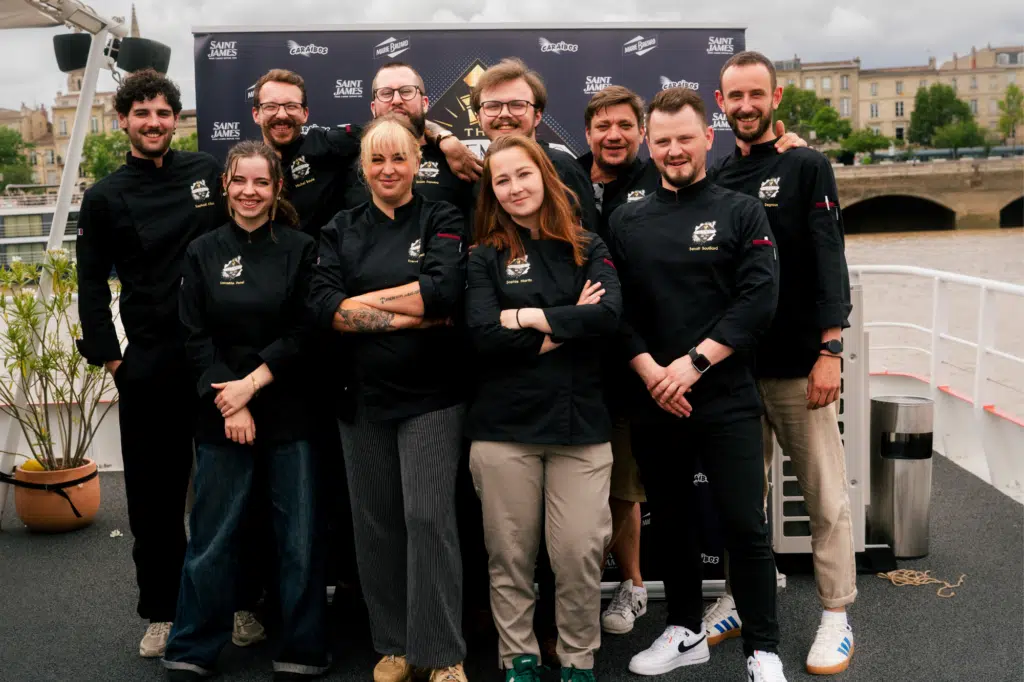
The 2026 jury, for the record: Matthias Giroud presiding, surrounded by Pierre Munier (2025 world champion), Mélanie Serre, Stephen Martin (bar historian and Saint James ambassador), Jérémy Lauilhé (MOF Barman 2023), and Benoît Guérin, the 2025 title holder.
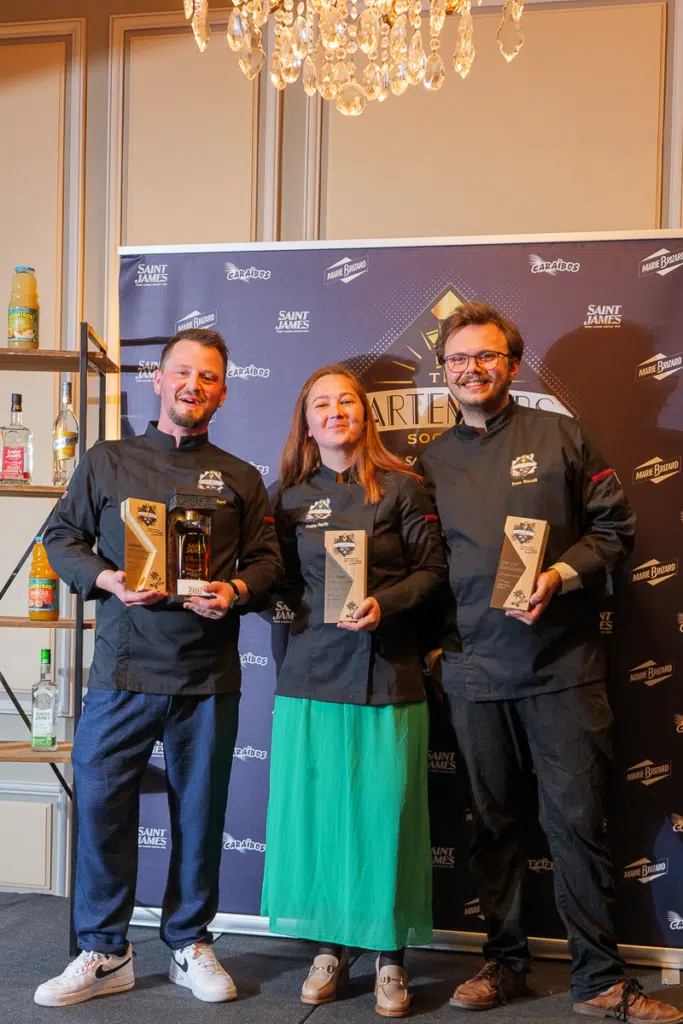
Media’s Choice Award: Robin Passera, and a trophy to present
A small novelty this year: the “Media’s Favorite” award. The idea is the kind we love to see. The Bartenders Society wanted to involve those who tell the story of mixology in the appreciation of creations. A more spontaneous perspective, further removed from technical bar measurements and tasting notes, focusing on the story and emotion that a cocktail conveys.
ForGeorges had the honor of presenting this award on behalf of the media present, and our choice fell on Robin Passera (L’Atelier by CDM, Cavalaire-sur-Mer). For a simple reason: consistency. From the choice of glassware to the service ritual, from the staging to the very conception of his cocktails, everything about him held together, thought out in advance, without a single false note. We immediately understood where he wanted to take us. This is exactly what a media award should reward: not pure performance, but the ability to engage.
Three days, ten finalists, a demanding theme, and results that tell a story. We will remember Benoit Bouillard’s patience, Sophie Martin’s precision, Enzo Riccelli’s composure for a first attempt, and Robin Passera’s consistency. And the rather healthy idea that in a cocktail competition, what remains at the end are the encounters.
See you at the international final.