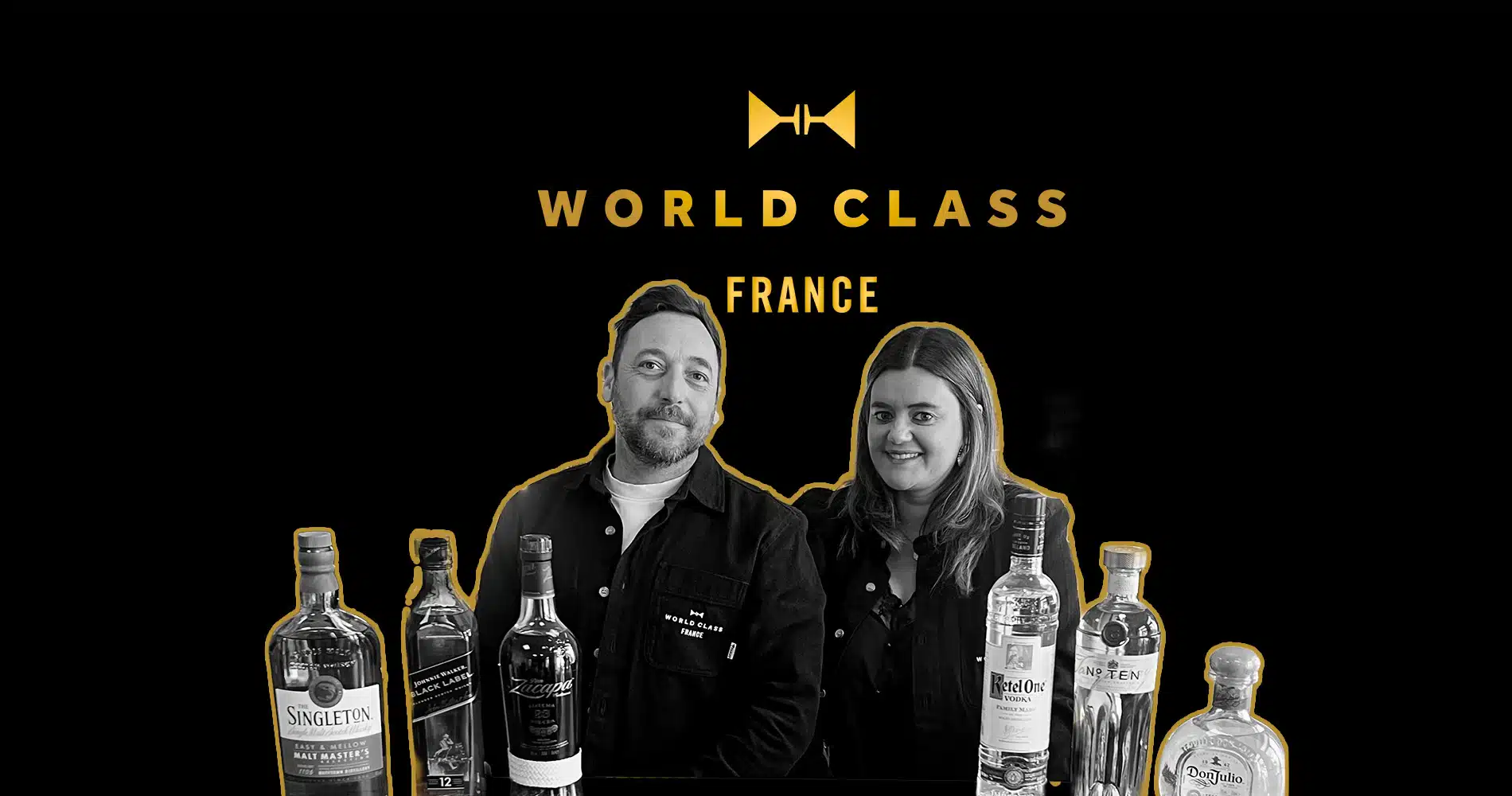
After an eight-year absence, World Class is making a comeback in France. Behind the relaunch is a scotch-based challenge that breaks competition norms, a roadshow that toured France, and an ambition that far exceeds the trophy. An interview with Lauriane Curci, on-trade customer marketing manager, and Olivier Martinez, Senior Brand Ambassador Dark Spirits at Diageo France.
"You are crazy. Bartenders will never agree to participate in a whisky competition."
This is, in essence, what several industry voices whispered to the Diageo France team when they unveiled the mandatory product for this 2026 edition: Johnnie Walker Black, at the heart of the Hop Scotch Challenge. On paper, the warning was not absurd. Scotch is not exactly the first spirit that comes to mind when talking about contemporary cocktails. And it is precisely for this reason that the choice was made.
"That's what made the challenge interesting," summarizes Lauriane Curci. "We have a challenger mindset, we like to think outside the box. It was a way to encourage bartenders to reinterpret a classic, to engage with a history of over 200 years, to express a vision." Verdict: the challenge was "largely met." Far from hindering applications, whisky served as a revelation. Proof that breaking the mold sometimes pays off.
Why return now
Eight years, on the scale of the French cocktail scene, is an eternity. "What was happening eight years ago, the talents, the establishments, have nothing to do with today anymore," recalls Lauriane Curci. In the meantime, a new generation has emerged, Paris has carved out a real place for itself in international rankings. France now competes without complexes with London and the rest of Europe.
At the time of relaunching World Class, Diageo's French subsidiary finalized the takeover of its brands announced in March 2024 and established dedicated governance since October 2025, with a clear intention: to put on-trade and advocacy back at the heart of the strategy. World Class has become the armed branch of this ambition. But there is no question this time of just "finding the best bartenders." The team speaks more of a platform for developing cocktail culture: meetings, knowledge transfer, skill development, training. "We know it's a demand from bartenders: to be closer to them, to connect. This is also how the competition was originally conceived."
The roadshow
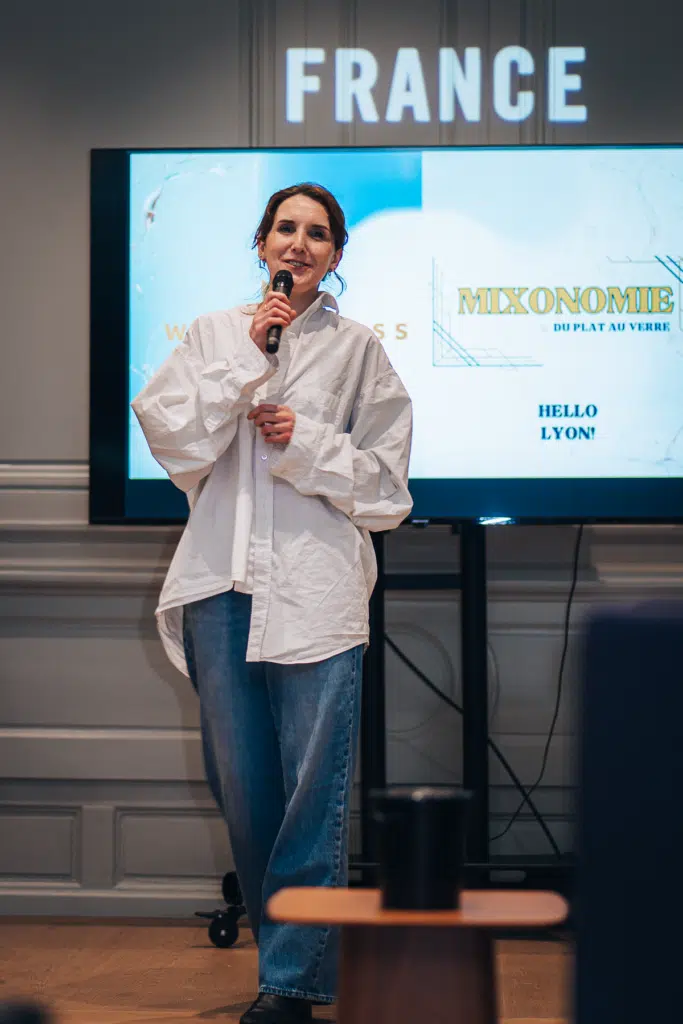
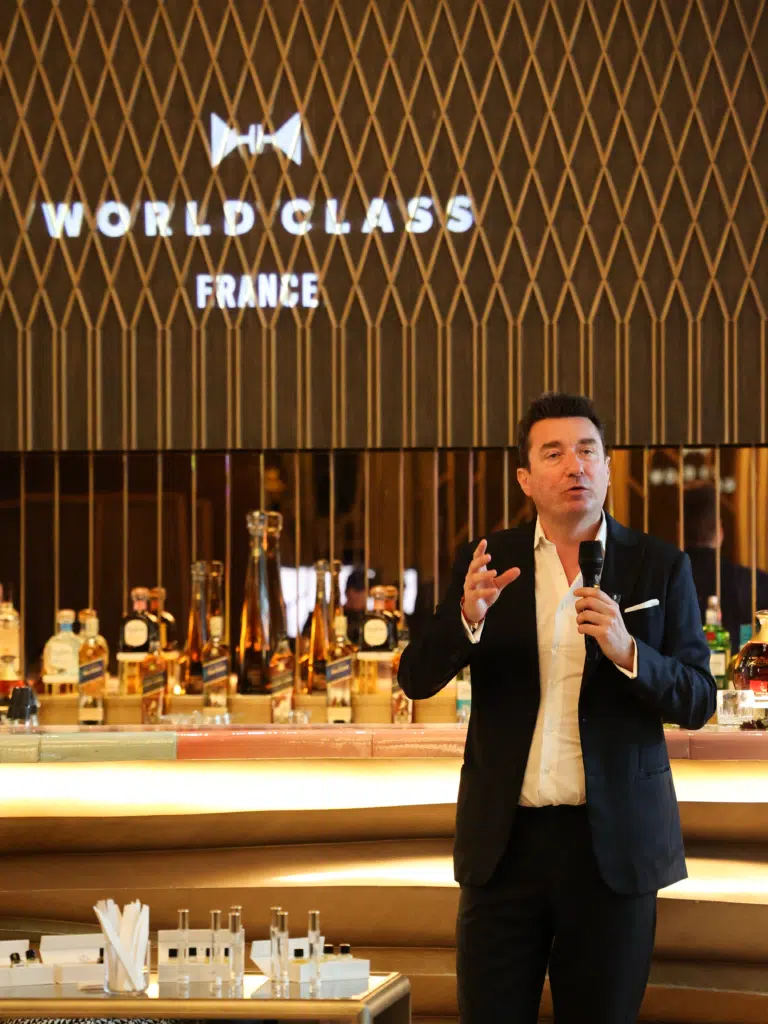
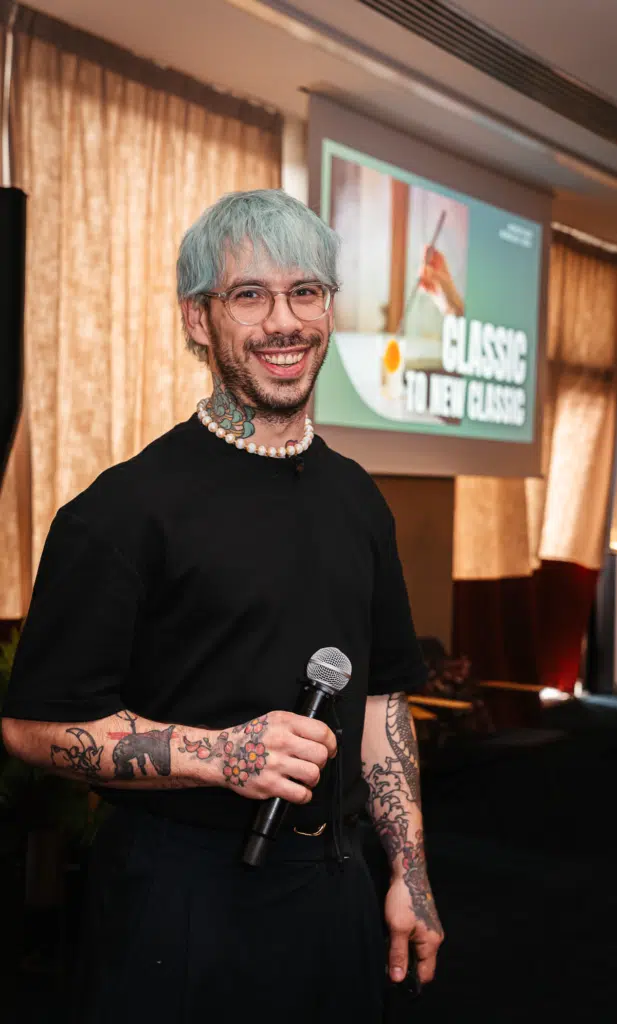
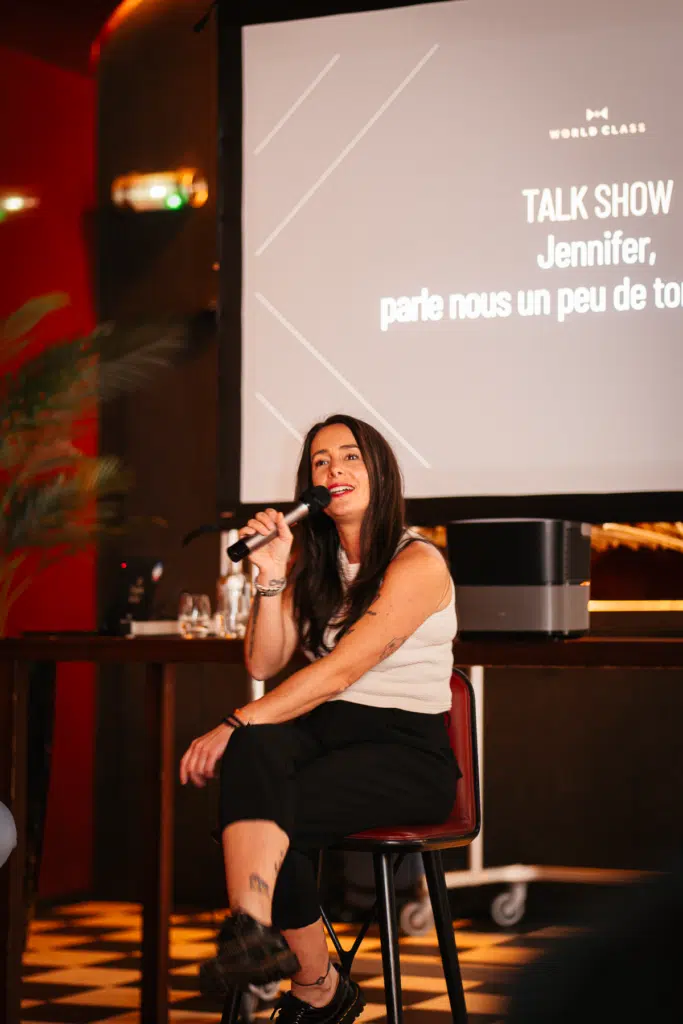
The first tangible sign of this change in approach: the roadshow format. Rather than a "Parisian event, in Paris, for Parisians," World Class went to meet bartenders in four cities (Paris, Lyon, Cannes, and Bordeaux), chosen for their significance in the cocktail scene. Three objectives behind this initiative: to recreate a connection and talk about the competition again to a generation that has sometimes never known it, to foster local communities, and to provide access, through masterclasses, to experts and themes rooted in the reality of the profession. The sessions captured on video then landed on Diageo Bar Academy, for those who couldn't make it.
An "extremely high" level and a debrief for everyone
Regarding the quality of the 2026 vintage, Olivier Martinez doesn't play false modesty: "The level was extremely high." What struck him wasn't an isolated performance, but the variety of approaches: some focusing on creativity, others on storytelling, others on pure technique, and, above all, "this collective energy" after eight years of absence.
One detail is worth noting because it is rare: all applicants received a debrief. Not just the 24 pre-selected candidates, including those rejected at the application stage. « We are the only ones to do this », emphasizes Olivier Martinez. « Dwelling on disappointment doesn't help. Providing a solution to a problem prepares you for what's next. » Bartenders, he says, took this feedback « very constructively ». Many have already announced they will return next year. A way, too, to foster this famous community in the long term.
The competition, the pinnacle of a more global cocktail culture
World Class is part of a broader strategy of training and education around mixology to reach different audiences.
Learning for Life, a global societal program launched in 2009, which trains people who were not destined for it for bar professions, and incidentally, addresses the labor shortage that the entire sector is experiencing. In France, the operation is gaining momentum: 40 candidates trained in the first year over two Parisian sessions, 60 this year thanks to the addition of Lyon, making a total of about a hundred people, of whom about 70% are currently employed in the hotel, restaurant, and catering (CHR) sector. The goal is three cities next year.
And World Class, which celebrates excellence and mixology. « Beyond the Diageo brand, the challenge is: how do we advance the cocktail industry and culture in France? »
These are precisely where the true indicators of the revival's success lie, far beyond the rankings. Rebuilding a community, reconnecting with bartenders with whom the bond had weakened during the subsidiary's setup, providing support, coaching, and mentoring. "If World Class becomes a benchmark again and we manage to advance the sector, it will be a success, even beyond the French winner."
The Road to Edinburgh
For the twelve who will compete on Monday, June 8th, in the French final, the story is just beginning. Three of them will secure their ticket to Rotterdam, Netherlands, from June 20th to 24th, not far from the Ketel One distillery. This year's European final will bring together some 17 countries and 51 candidates spread across four challenges: a volume and pressure "very close to a world final," warns Olivier Martinez. Each nation will designate its champion. The one representing France will then head to Edinburgh, from October 18th to 23rd, for the world final.
The support will escalate: storytelling, cocktail creation with brand ambassadors, access to the World Class community and partners. Light for the European stage (only two weeks separate the two finals), it will become significantly more intensive for the global finalist, who will benefit from several months of coaching.
This passage through the Netherlands also highlights Ketel One, a brand with strong credibility among bartenders and significant potential in the French market. A challenge is dedicated to it from the French final, and another awaits in Europe.
"Be yourselves, and dare"
Former bartender turned brand ambassador, Olivier Martinez knows both sides of the bar. His advice to the finalists is in two parts. First, the 360-degree vision: "Every detail matters. World Class is like having your own bar, from the welcome to the exit." Research the judges, the other contestants, the environment. Then, let go: "Be yourselves, and dare. If you don't try anything, you get nothing."
Lauriane Curci adds with the message hammered during the roadshows: "Don't be afraid to dive in. Nothing to lose, everything to gain."
Olivier Martinez, for his part, concludes with a motto inherited from the restaurant industry: "Excellent service is the result of excellent preparation." Translation: those who are well-prepared fear nothing. And those who fear nothing can go far.
A desire to be long-lasting
The question we ask ourselves remains: and what's next? The priority, in the short term, is to succeed in this relaunch that has been worked on for months. But the ambition is clearly stated: to make World Class last, to grow year after year, to bring together partners for a French-style cocktail festival and a 360-degree on-trade activation.
"This is not a one-shot." For a competition returning after eight years of silence, this is perhaps the most important sentence.