
At a time when Europe is asserting itself more than ever as one of the most creative and influential regions on the global bar scene, the launch of the Europe’s 50 Best Bars ranking marks a major turning point for the industry. Designed to reflect the richness, diversity, and innovation of bars across the continent, this new list aims to offer a more nuanced and representative picture of European bar scenes, from historic capitals to emerging destinations.
To unpack the challenges behind this unprecedented ranking, its ambitions, and the trends shaping today’s — and tomorrow’s — best bars in Europe, we spoke with two key figures. On one side, Emma Sleight, Head of Content at Europe’s 50 Best Bars, looks back on the origins of the project, its methodology, and the strategic vision driving it. On the other, Laurence Marot, Academy Chair France, shares her expert perspective on the evolution of the French and European scenes, their strengths, their challenges, and the talents shaping the future of the bar world.
Two complementary perspectives — between international vision and on-the-ground expertise — to better understand what it means today, and tomorrow, to be a great bar in Europe.
What is the origin of this new Europe’s 50 Best Bars ranking? Why was it necessary to create a list specifically dedicated to Europe, in addition to the World’s 50 Best Bars global ranking?

Emma Sleight – Head of Content, Europe’s 50 Best Bars:
Europe’s 50 Best Bars was born from a desire to shine a light on the richness and extraordinary diversity of bar scenes across the European continent. The 50 Best initiative has always had a mission to celebrate global excellence in gastronomy and hospitality, as well as the teams and personalities who create truly memorable experiences.
While European bars already feature — and will continue to feature — in the various editions of The World’s 50 Best Bars, creating a regional ranking allows us to give greater visibility to the true diversity of European venues. From sophisticated hotel bars to sherry bars, beer temples, mixology-focused spaces and the most experimental venues, Europe offers a wide range of concepts that this ranking aims to fully showcase.
How is the European Academy structured and what are the criteria for selecting voters? Does the methodology differ from that of the World’s 50 Best Bars ranking?
Emma Sleight : The list of Academy Chairs, responsible for overseeing the different European regions, will be announced shortly. What we can already say is that their selection, as well as the voting process, is based on the same proven methodology used for The World’s 50 Best Bars.
Voters are selected by their regional Academy Chair for their expertise, international experience, in-depth knowledge of the bar scene, as well as for their credibility and sense of confidentiality. The ranking is based on the votes of 300 drinks experts, including bartenders, bar owners, specialised journalists and highly knowledgeable cocktail enthusiasts, from across Europe.
The notion of “best” is left to the judgment of these experts. The list is the result of a simple tally of the votes cast. Because it is based on personal experiences, the ranking cannot be definitive by nature, but we believe it offers an honest snapshot of current trends and a credible indicator of the best places to drink in Europe.
Which aspects of the European bar scene will this new ranking reflect more accurately compared with the global list?
Emma Sleight : Few bar scenes are as diverse as Europe’s, where centuries-old taverns naturally coexist with avant-garde cocktail laboratories. In order to celebrate this diversity and ensure that the ranking faithfully reflects a constantly evolving region, all countries located west of the Caspian Sea are eligible to vote — from Iceland and Portugal in the west to Armenia and Azerbaijan in the east.
This broad geographical coverage makes it possible to produce a ranking that is truly representative of the entire continent and to offer a more refined and nuanced picture of European bar scenes, including those in emerging destinations.
What are the major trends shaping the best bars in Europe today?
Emma Sleight : The European bar scene is constantly evolving, driven by changing consumer expectations and a growing desire for more meaningful experiences. One of the most striking trends is the rise of mindful drinking, with increasing interest in alcohol-free and low-alcohol beverages.
This is reflected in the success of creative formats such as tasting flights and “tiny cocktails”, which allow guests to explore flavours without excess.
At the same time, authenticity and transparency have become essential criteria. Consumers want to understand the story behind what they are drinking. Leading venues are responding by highlighting local ingredients, regional flavours and seasonal menus. This approach, often referred to as “farm-to-glass”, reconnects guests with the origins of their cocktails and turns tasting into an experience that is both narrative and responsible.
These developments are part of a broader cultural movement towards conscious and experiential consumption, making the European bar scene more innovative, more diverse and more exciting than ever.
Do we see strong cultural differences between Northern and Southern Europe, or between Eastern and Western Europe?
Emma Sleight : Yes, cultural differences do exist, particularly in social habits and in the role bars play in everyday life. However, it is important to remember that these practices vary greatly from one country to another — and even from one city to another.
In Northern European countries such as Ireland or Germany, bars are often key social spaces, especially in the evenings and at weekends. They serve as meeting places where atmosphere and sharing play a central role.
Across much of Western Europe (in the UK, France or Belgium), there is a strong appetite for specialised or themed bars: cocktail bars, wine bars or venues dedicated to craft beer, offering carefully curated menus designed to appeal to a wide range of profiles.
In Southern Europe, particularly in Spain, Italy and Greece, bars are more deeply woven into everyday life and closely linked to food culture. Drinking there is more relaxed, spread out over time, and often accompanies meals or tapas, with later opening hours that reflect local lifestyles.
In many Eastern European countries, bars play a more community-oriented role, strongly rooted in traditions and social bonds. Formats vary from country to country, but accessibility and conviviality are often key priorities.
Overall, while certain regional trends can be identified, bar culture in Europe remains extremely diverse, shaped by local customs, regulatory frameworks and evolving consumer expectations far more than by simple geographical boundaries.
How are environmental concerns and sustainability transforming the practices of Europe’s leading bars?
Emma Sleight : Growing environmental awareness among consumers is having a significant impact on how Europe’s most renowned bars operate. Guests now expect venues to reflect their values, making sustainability no longer a differentiating factor, but an expected standard.
Many leading bars are therefore adopting practices aimed at reducing their environmental footprint while maintaining the highest quality standards: improving energy efficiency, reducing waste and optimising the use of ingredients throughout the supply chain.
Ingredient-driven innovation plays a key role, with techniques such as fermentation, infusions and preservation helping to extend product life, limit waste and enhance aromatic complexity.
Zero-waste initiatives are also gaining momentum, through collaborations with local suppliers and neighbouring businesses to repurpose by-products and surplus ingredients. At the same time, local and seasonal sourcing is increasingly prioritised, reducing the carbon footprint associated with transportation while supporting regional producers.
Sustainability is thus becoming a true marker of quality rather than a compromise. By creatively using accessible, local ingredients to design premium cocktails and experiences, Europe’s best bars demonstrate that responsible practices can strengthen both brand reputation and the guest experience.
What impact do you hope this ranking will have on the European bar industry?
Emma Sleight : We hope it will inject new momentum into the entire sector, from established institutions to new openings driven by an emerging generation of talent. Our other regional rankings have already shown the considerable impact that highlighting innovators and leading figures in the art of cocktails can have on the international scene.
When Asia’s 50 Best Bars was launched in 2018, nearly 70% of the ranked venues were located in traditional cocktail capitals. Seven years later, new communities have emerged in more unexpected cities, from Guangzhou and Kumamoto to Taichung and Goa.
We are delighted to continue celebrating established hubs of excellence such as London, Paris, Barcelona and Milan, while also shining a light on a new generation of bars from a wide range of European destinations, redefining what it means to be a great bar today and tomorrow.
Can this ranking become a real economic and tourism driver?
Emma Sleight : We have received a great deal of feedback from bars that have been ranked or have reached the highly coveted number one spot. For example, Simone Caporale from Sips in Barcelona (No. 1 on The World’s 50 Best Bars 2023) told us that queues began forming the very next day after the announcement.
There is no doubt that being featured in the ranking turns these venues into true destinations for cocktail lovers, whether local or visiting. If we manage to encourage more people to discover places they might not otherwise have considered, then we consider that a success.
How do you respond to the recurring criticism of the Best Bars rankings, particularly regarding geographical representation and the subjectivity of the voting?
Emma Sleight : We see the subjectivity of the vote as a strength, because the entire process — and the ranking that results from it — is inherently subjective by nature. We do not impose any strict criteria on our voters to define what “best” means: we simply ask them to identify their seven best experiences during the voting period.
In order to ensure a dynamic ranking that truly reflects the diversity of the European bar landscape, we actively encourage our Academy Chairs to refresh and expand the panel of voters within this regional Academy. Although Academy Chairs also take part in the global ranking, the European panel operates entirely independently: votes are organised separately, at different times, and focus on different geographical areas.
Looking ahead, what do you think an exceptional European bar will look like in five years’ time? What major developments do you anticipate?
Emma Sleight : That is an excellent question, and one that is difficult to answer with certainty. What is clear, however, is that European bars will face the same challenges as everywhere else: attracting and retaining talent, integrating sustainability into changing environments and practices, and responding to constantly evolving consumer expectations.
An exceptional bar could be one that sees sustainability not merely as a foundation, but as a driving force — going beyond local sourcing to embrace a holistic approach that includes team wellbeing and human development. It could also invest in the “craftification” of alcohol-free and low-alcohol alternatives, in order to meet changing drinking habits, particularly among younger generations.
Finally, it may assert a strong and clearly defined identity by highlighting what truly makes it unique, such as a snacks or spirits offering built around local producers, micro-distilleries, nearby farms or independent breweries.
If we talk more about France now, Laurence, how do you see the evolution of the French bar scene in recent years?
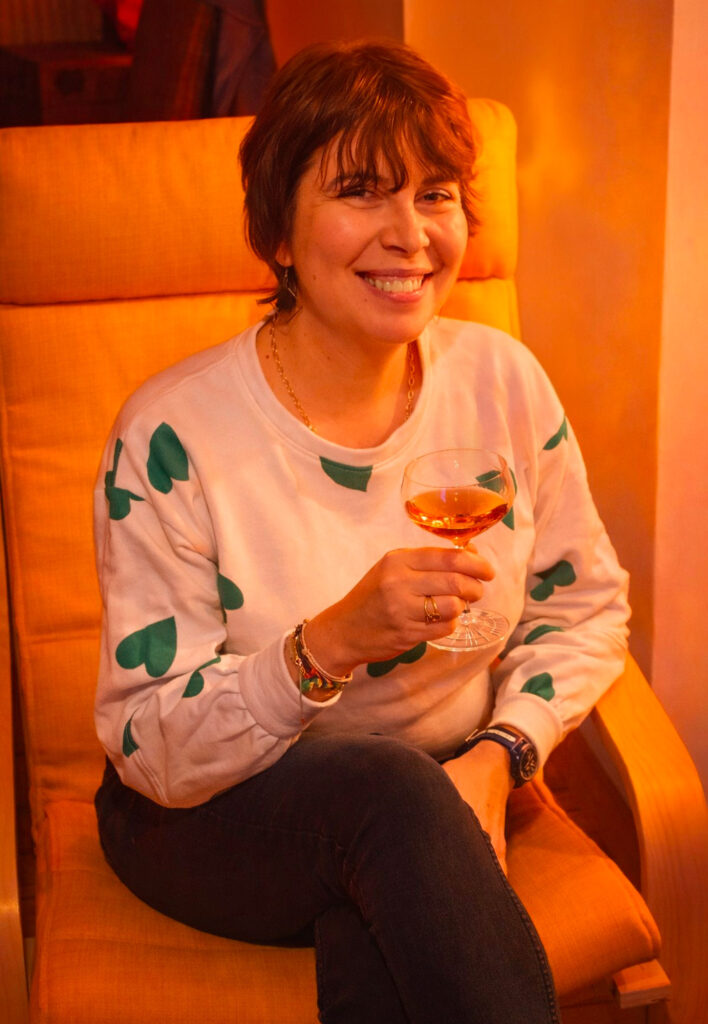
Laurence Marot - Academy Chair France : The French bar scene has become increasingly creative and technically accomplished, driven by figures who are now internationally recognised. Iconic personalities such as Nico de Soto, at the helm of Danico in Paris (ranked in The World’s 50 Best Bars) and Mace in New York; Rémy Savage, now associated with four venues in France (Bar Nouveau and Abstract in Paris, Abstract in Lyon and La Buvette des Quais in Bordeaux); and Hyacinthe Lescoët, co-founder of The Cambridge Public House and Little Red Door, have played a major role in establishing the credibility of the French scene on the global stage.
Hotel bars are also playing a major role in this evolution. Professionals such as Romain de Courcy at the Ritz Bar, Angelo Forte at Bar Joséphine at the Lutetia, Thibault Méquignon at the George V, Benjamin Nolf at La Réserve in Paris, or Barbara Migliaccio Spina at Fouquet’s are now embracing a more open and accessible approach, aimed at reaching a broader audience beyond their traditional clientele. While prices may sometimes be higher, these venues generally offer a complete experience, where décor, service and cocktail quality come together as a coherent whole.
Moreover, the cocktail scene is no longer limited to Paris. It has expanded widely across the country: Bordeaux, Lyon, Marseille, Lille, Montpellier, Toulouse, Nice, Nantes and Rennes — as well as more unexpected cities such as Limoges — now host bars of a very high standard and extremely talented bartenders. I am fortunate to meet them regularly, both in the field and through the many competitions organised throughout the year.
One of the main challenges today remains access to training: professional qualifications, certifications, specialised schools… Having a strong technical foundation, cocktail culture and product knowledge is essential to working behind a bar. France also benefits from an exceptional spirits heritage, which bartenders are increasingly proud of and now know how to showcase with intelligence and modernity.
Is France catching up with other major European capitals such as London or Barcelona ?
Laurence Marot : Today, the French scene has no inferiority complex compared to other major European capitals. It may sometimes be less visible in certain international rankings, but the level of quality is just as high. In recent years, significant progress has been made in one key area in particular: hospitality, which has become just as decisive in the cocktail experience as the quality of the drinks themselves.
In recent months, Paris has seen the emergence of many new venues with strong, highly distinctive concepts (Memento, Superfine, Abstract or DeVie, to name just a few), offering remarkable diversity. Cocktail lovers now enjoy a scene that is rich, demanding and highly stimulating.
What France may still be missing is a major unifying event: a dedicated bar trade show capable of bringing together the national scene and attracting an international audience, similar to what Cocktail Spirits — organised by Liquid Liquid — represented before it came to an end after the Covid crisis.
Which French bars or bartenders best embody this new generation and could legitimately feature in a European ranking?
Laurence Marot : The French scene today is extremely dense and remarkably consistent in terms of quality, which makes the selection exercise particularly complex. Many bars and bartenders clearly have the level required to feature in a European ranking, whether in terms of technical skill, creativity, identity, hospitality or environmental responsibility.
Rather than naming a few and risking overlooking others who are just as deserving, I would say that this new generation stands out above all for its ability to create strong, coherent concepts, deeply rooted in their local territory while fully meeting international standards. This is reflected in particular in the many guest shifts they carry out around the world. France now has a sufficiently rich pool of talent to see many venues naturally emerge in this type of ranking in the years to come.
