The investigation into the spirit that has conquered the trendy bars worldwide
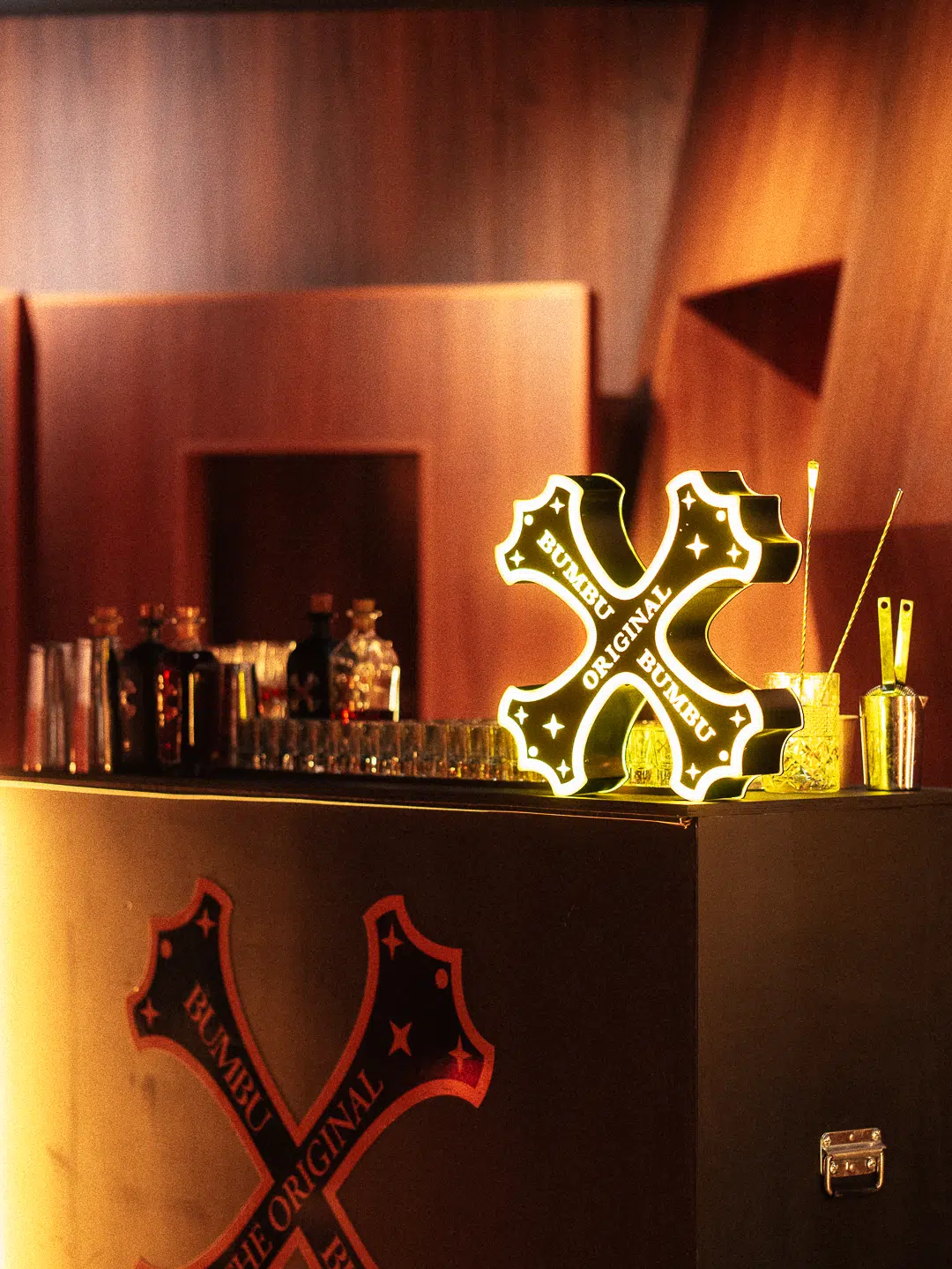
In the dimly lit alleys of Soho in New York, behind the hushed counters of Parisian clubs, on the sun-drenched rooftops of Bucharest, the same silhouette stands out: a massive bottle adorned with a tarnished metal cross. Bumbu! In less than a decade, this rum-based spirit from Barbados (for Bumbu Original) has become one of the most fascinating phenomena in the premium spirits industry. A success story that owes as much to a cleverly studied marketing strategy as to its alignment with the times.
Act I: The genesis of a modern brand
The story begins in 2016, when Brett Berish, an American entrepreneur at the head of Sovereign Brands, decided to “reinvent rum”. The son of a former president of Jim Beam, Brett is no novice. He had already created Armand de Brignac (Jay-Z’s famous “Ace of Spades”) and D’Ussé Cognac. With Bumbu, he aimed for a bold positioning: to transform a traditional Caribbean spirit into a lifestyle object.
The challenge? To revive a four-century-old recipe, that of 16th-century sailors and merchants who mixed their rum with local spices, creating what they called “bumbu” in Creole, literally, a blend. But rather than sticking to a folkloric narrative, Brett Berish built a resolutely contemporary brand.
The first product released, Bumbu original, is an exercise in balancing. Distilled at the West Indies Rum Distillery in Barbados, a century-old distillery founded in 1893, Bumbu blends ingredients from eight different countries: Barbados, Dominican Republic, El Salvador, Guyana, Costa Rica, Brazil, and Honduras. It is aged in Kentucky bourbon barrels. The result: gourmet notes of caramel, Madagascar vanilla, ripe banana, and sweet spices, with a velvety texture that immediately seduces. Not quite a spiced rum, nor a rum (according to European legislation), but a product made to appeal to contemporary consumers.
Act II: A Masterful Design
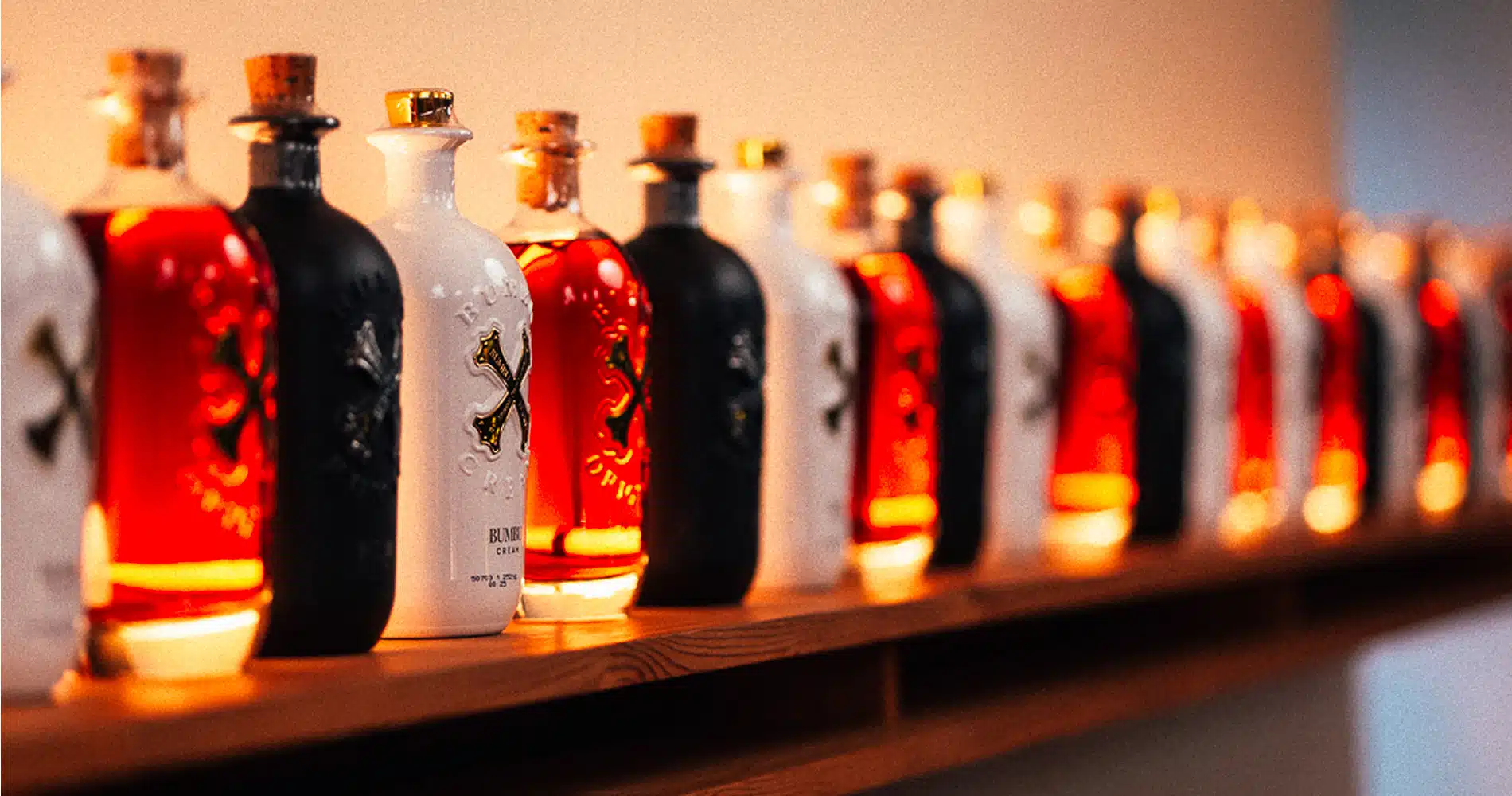
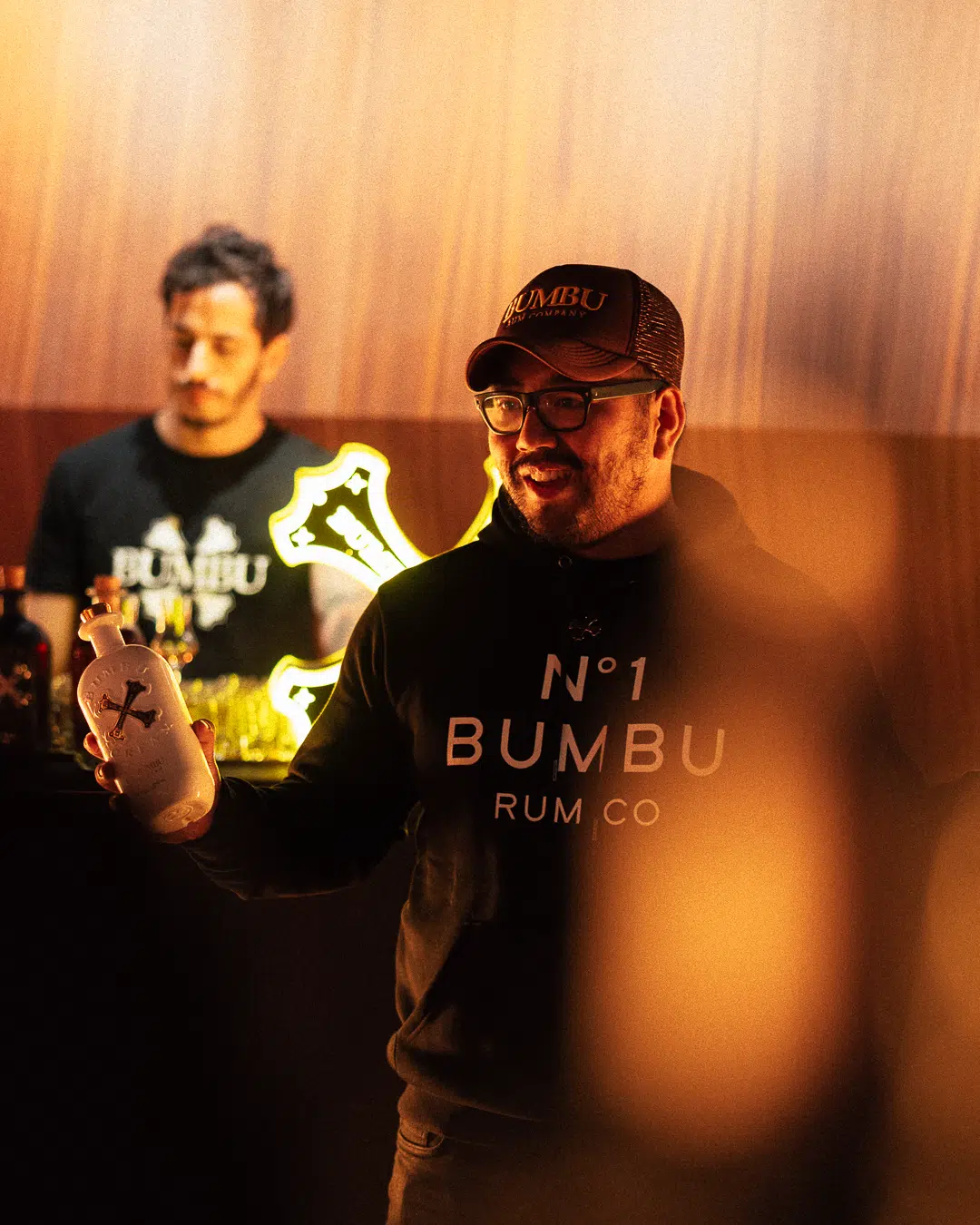
If the liquid pleases consumers, it is the packaging that breaks all the rules. In a world where rums traditionally dress up in paper labels, Bumbu makes the radical choice of absence. No glued label, no back label. Just a massive jug-shaped bottle, evoking 17th-century pirate imagery, with a patinated metal cross, embedded directly into the glass. On the back, an engraved map of the Caribbean. The stopper? A cork cylinder that pops with every opening. “The bottle is a display piece,” summarizes a Parisian wine merchant. “It’s exactly what bars and consumers are looking for: an object that tells a story even before the first glass is poured.” The brand becomes a lifestyle accessory.
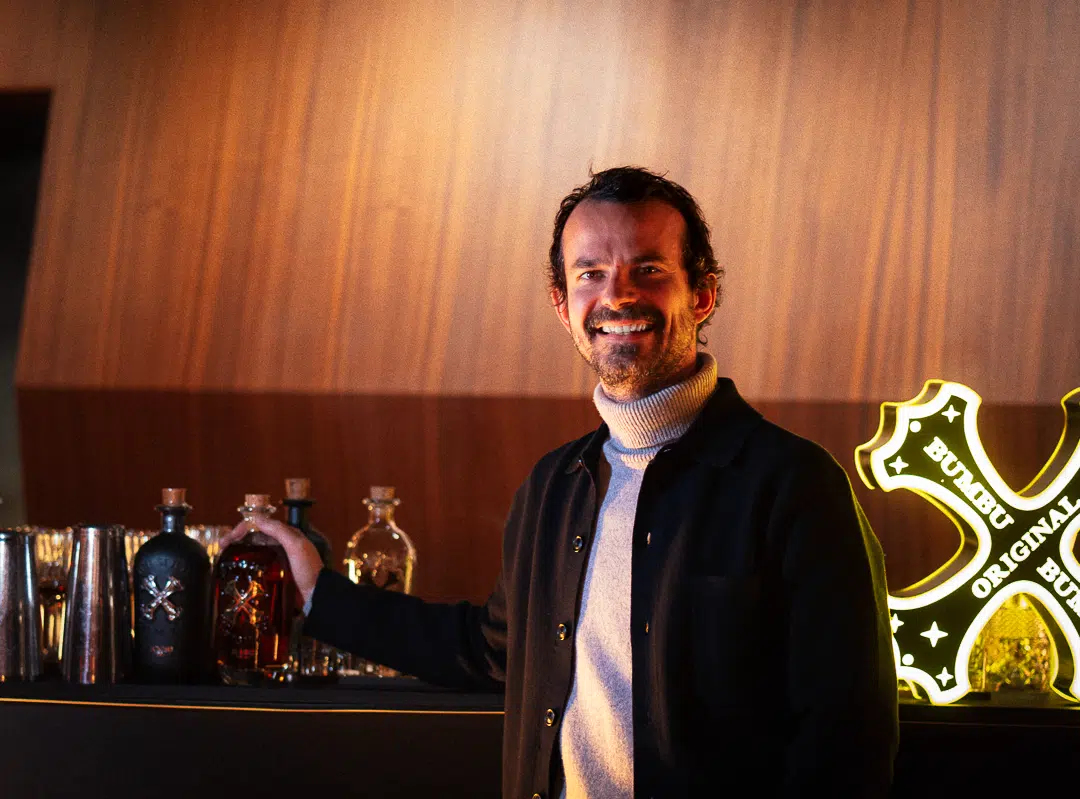
Martial Reynaud, Brand Director for Whisky and Rum at Pernod Ricard France, notes the impact of this distinctive design: “Last week, during a promotion in a supermarket, a customer asked me for ‘the rum with the cross’. This cross has become a real identifying element. Consumers recognize the bottle first, then the brand.“
Act III: The Urban Ecosystem as a Launchpad
Brett Berish immediately understood that a good product isn’t enough. It needs a credible ambassador. In 2017, he signed Lil Wayne as an international ambassador. The choice was not accidental: Weezy is not just an influential rapper, he’s an icon of urban culture, a regular on world tours who spends as much time in studios as in trendy venues.
The brand even created “The Bumbu Room”, a series of interviews where celebrities answer questions from fans, strengthening the intimacy with its community.
“The targeted communities revolve around urban music, with an openly ostentatious dimension“, explains Martial Reynaud. “Consuming Bumbu also means adopting a lifestyle.“
Act IV: The Methodical Conquest of the Globe
The numbers speak for themselves. In 2023, according to Nielsen, Bumbu became the best-selling super-premium rum in British bars, with 75.9% growth over 12 months. In the off-trade (supermarkets), the brand entered the top 10 rums in the UK for the first time with a 36% increase.
In France, the deployment is equally strategic. After being distributed by Maison Villevert, Bumbu moved in March 2024 into the portfolio of Pernod Ricard, which had taken a minority stake in Sovereign Brands in 2021 (and then increased its stake in 2022). This alliance with the French giant changes the game.
Pernod Ricard’s strategy: the field first
“Since taking over distribution in March 2024, we have focused on operational success,” details Martial Reynaud. “This means, above all, an intensive field presence.”
The results were not long in coming. Since this takeover, Bumbu has shown growth across all networks. In the out-of-home sector, the brand has become the 2nd largest contributor to rum gains with 18% growth in value. In supermarkets, the figures are even more impressive: Bumbu is the leading contributor to the growth of the super-premium and ultra-premium segments, recording 69% growth in volume year-on-year.
Six Brand Ambassadors are now dedicated to Sovereign brands, including Bumbu in France, a deployment that testifies to the brand’s priority status within the portfolio. “Bumbu is one of our priority brands today,” confirms Martial Reynaud. “This proximity to our clients and consumers remains our guiding principle for the years to come.”
This patient approach is paying off. The brand is smartly positioning itself in the 30-40 euro range, a mastered psychological price point: premium enough to be desirable, accessible enough not to be elitist. A pricing strategy aimed at offering a perception of superior value for the displayed price, while maintaining an attractive quality-price ratio for the consumer.
“The product stands out on supermarket shelves“, observes Martial Reynaud. “In today’s competitive landscape, Bumbu brings a real renewal. But packaging isn’t enough: it needs authenticity and a true organoleptic promise. It’s this combination that makes Bumbu’s strength.“
A Distinct Position within the Pernod Ricard Ecosystem
Within Pernod Ricard France’s rum portfolio, Bumbu occupies a unique place. “We have three rum brands“, explains Martial Reynaud. “Havana Club, a Cuban rum, primarily designed for mixology. Bumbu doesn’t share this primary vocation, even though it’s perfectly suited for cocktails. Then there’s La Hechicera, which is closer to our XO in terms of profile, but with a completely different positioning. La Hechicera focuses on authenticity and traditional Colombian codes, thus appealing to a different type of consumer.“
Act V: A Trilogy of Complementary References
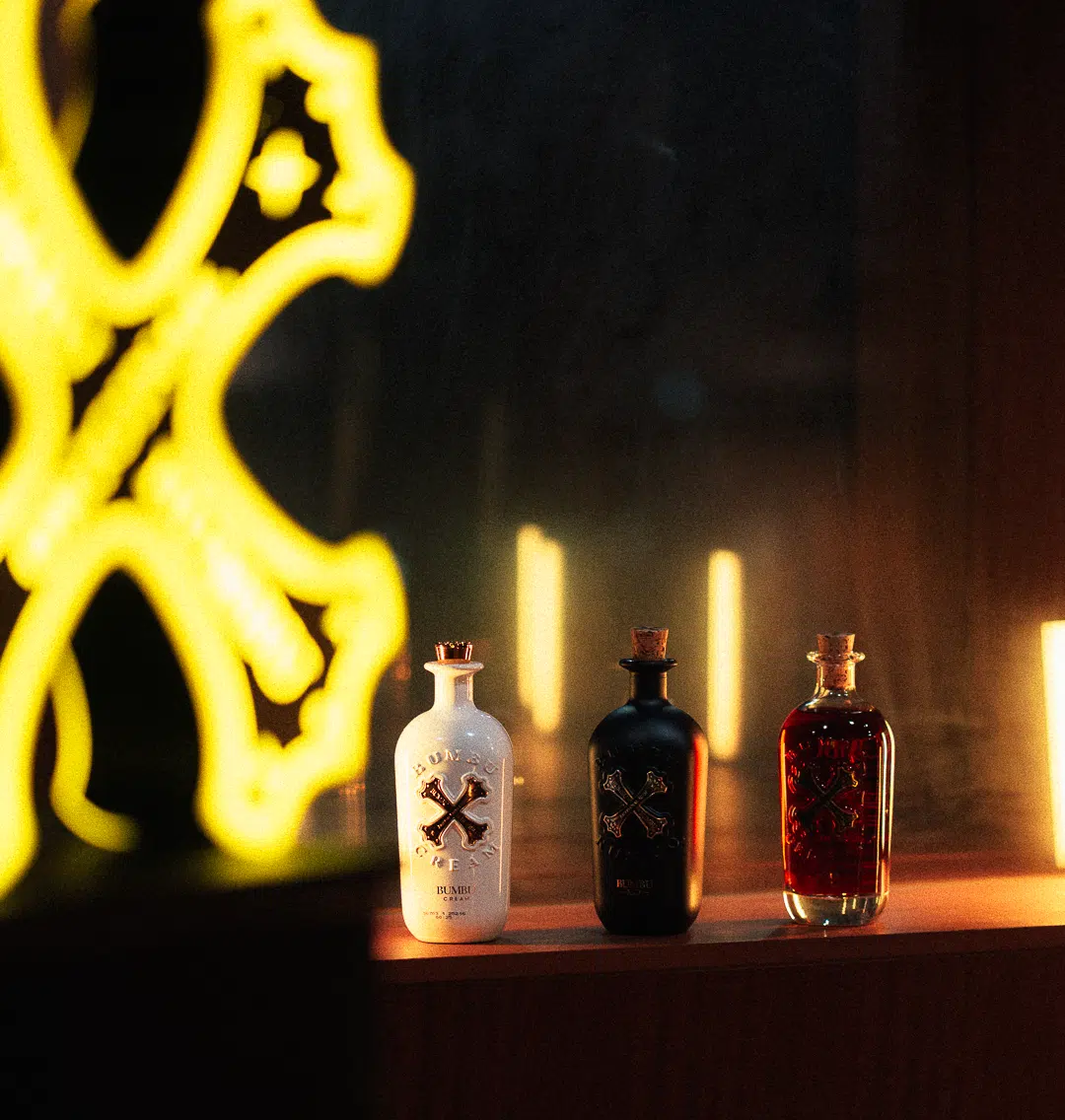
Three references make up the Bumbu range, each with its own personality and consumption occasion. “It’s the complementarity of these three products that explains the success“, summarizes Martial Reynaud.
Bumbu Original (40% vol, €39.90) remains the best-seller and the gateway for consumers. “The organoleptic profile aligns with the trend of accessible tasting rums. For enthusiasts just beginning to explore the world of rums, Bumbu Original offers an approachable entry point, with vanilla notes and hints of banana“, details Martial Reynaud.
The three references are aimed at convivial moments. “Bumbu Original works particularly well as a shot, to accompany these high-energy moments“, he specifies.
Bumbu XO (40% vol, €45.50) targets a more experienced clientele. “XO offers a more complex organoleptic profile, intended for seasoned consumers who have developed a mature relationship with rum. It lends itself more to moments of contemplative tasting.“
Bumbu Cream (15% vol, €29.90) adds a touch of originality to the range. “It’s an atypical product, a Bumbu rum cream with surprising minty notes. Many consumers appreciate it as a digestif, like a liquid dessert, in the spirit of an Espresso Martini.“
In trendy bars, Bumbu has become a bartender’s go-to. “The product works remarkably well in cocktails“, highlights Martial Reynaud, even though mixology is not the brand’s primary use.
The question of status: rum or spirit?
A subject frequently comes up among professionals: Is Bumbu Original really a rum? “Original is a rum-based spirit“, clarifies Martial Reynaud. “XO, on the other hand, is indeed a rum. As for Cream, it’s a liqueur, which raises no ambiguity among consumers or professionals.“
“This question concerns Original, but it applies to the entire segment in which we operate. Our direct competitors are in the same situation. Regulation prevents us from using the ‘rum’ appellation, but it responds to a real demand from consumers for a more accessible organoleptic profile.“
His position is clear: “There is no need to question our category. The consumer does not buy Bumbu for its regulatory status, but to enjoy a moment of pleasure. Whether the product is categorized as a rum-based spirit or as rum ultimately matters very little.“
Act VI: Awards that validate this positioning
Distinctions are pouring in. The Los Angeles International Spirits Competition crowns Bumbu “Best in its Category” two consecutive years, in 2017 and 2018. The Los Angeles International Wine & Spirits Competition awards the brand five gold medals in four years. These recognitions are not trivial: they legitimize Bumbu to rum purists who might have disdained its lifestyle positioning. An obsession with quality, combined with a meticulously planned marketing approach, makes all the difference.
The opportunity of a dynamic segment
In a global spirits market that is barely holding on, Bumbu is riding the only upward trend. “The opportunity lies in the super-premium and ultra-premium rum segment“, analyzes Martial Reynaud. “This is currently the only dynamic category in the world of rums. The rest of the market is struggling, as is the entire spirits industry. However, premium rums are holding their ground.”
Why? “Consumers continue to seek pleasure and are gravitating towards valued brands. These segments are showing notable growth, largely driven by Bumbu.”
A distribution strategy across all channels
Bumbu is present in both large retailers and the HRI sector (cafes, hotels, restaurants), wine shops, and B2B. One feature distinguishes the two channels: “For the out-of-home circuit, the product is presented in a box“, specifies Martial Reynaud. “The liquid and the bottle remain the same, but the commercial offering differs depending on the channel.”
As for future innovations? “The three current references form a coherent and complementary set. We believe we already have a very complete portfolio with Bumbu“, concludes the Pernod Ricard representative.
Epilogue: The Bumbu model, or how to reinvent a category
The brand has succeeded where many have failed: creating a bridge between rum connoisseurs and a younger, urban, connected clientele for whom the choice of a spirit is also a statement of identity.
The success of Bumbu relies on clear positioning, summarizes Martial Reynaud. Distinctive packaging isn’t enough; there must be quality liquid behind it. The accessible organoleptic profile meets the expectations of tasting rum enthusiasts. Consumers find something unique in Bumbu in this market.
The future? Brett Berish, the man who created Jay-Z and Lil Wayne’s preferred spirits, is in no hurry. No new references on the horizon, no haphazard diversification. Just a methodical plan, executed with consistency.
In France, the strategy deployed by Pernod Ricard portends even greater success. With its six dedicated Brand Ambassadors, its commercial firepower, and its methodical field approach, the French giant has all the assets to amplify Bumbu’s presence in the territory. “We will continue the strategy implemented for nearly two years and which is proving successful. We will continue on this path and intensify our efforts“, confirms Martial Reynaud. This alliance between Sovereign Brands’ disruptive DNA and Pernod Ricard’s distribution power could well propel Bumbu to new heights in the French market.
This patient approach, this obsession with consistency, is perhaps the secret of Bumbu. In a world where spirits brands bloom and disappear with the rhythm of trends, Bumbu is building a solid empire brick by brick.