Analysis – The press release issued overnight on March 25-26, 2026, confirms discussions between the world’s number two spirits company and the largest American whiskey producer. Behind the rhetoric of a “merger of equals,” a cross-examination of the two portfolios reveals a more nuanced picture.
The context: consolidation under constraint
Pernod Ricard is exploring a merger with Brown-Forman, the owner of Jack Daniel’s, as companies in the sector seek consolidation routes amidst a slowdown in the alcohol market. The announcement did not come out of the blue. Pernod Ricard launched a restructuring plan aiming to achieve one billion euros in savings between 2026 and 2029, including job cuts. For its part, Brown-Forman presented a vast restructuring plan last year to protect its margins in the face of rising input costs. Two weakened groups seeking to strengthen each other – this is the first strategic warning sign of such an operation.I. Complementarity reigns: American whiskey, a blind spot in Pernod’s portfolio
This is the most obvious missing piece, and undoubtedly the central reason driving Pernod Ricard towards this move. The French group has a vast portfolio that includes Irish whiskey, Scotch, and tequila, but shows relatively low exposure to American whiskey. A dizzying gap in a context where bourbon and Tennessee whiskey have been the most powerful engine of the global premium market for the past ten years.
Brown-Forman’s portfolio includes the Jack Daniel’s family, Woodford Reserve, Old Forester, The Glendronach, Glenglassaugh, Benriach, Diplomático Rum, Gin Mare, Fords Gin, and Slane. Leading the pack, Jack Daniel’s remains the world’s best-selling spirits brand behind Johnnie Walker, an unparalleled asset in Pernod’s stable. Woodford Reserve, spearheading the premiumization of bourbon with its cocktail and lifestyle clientele, would complete the high-end where Pernod is almost absent in the American market.
Pernod is strong in vodka and aperitifs, while Brown-Forman brings premium American whiskey, creating little overlap. This low level of duplication in the most strategic category is precisely what makes the operation attractive on paper.
II. Global Distribution: Pernod’s Secret Weapon
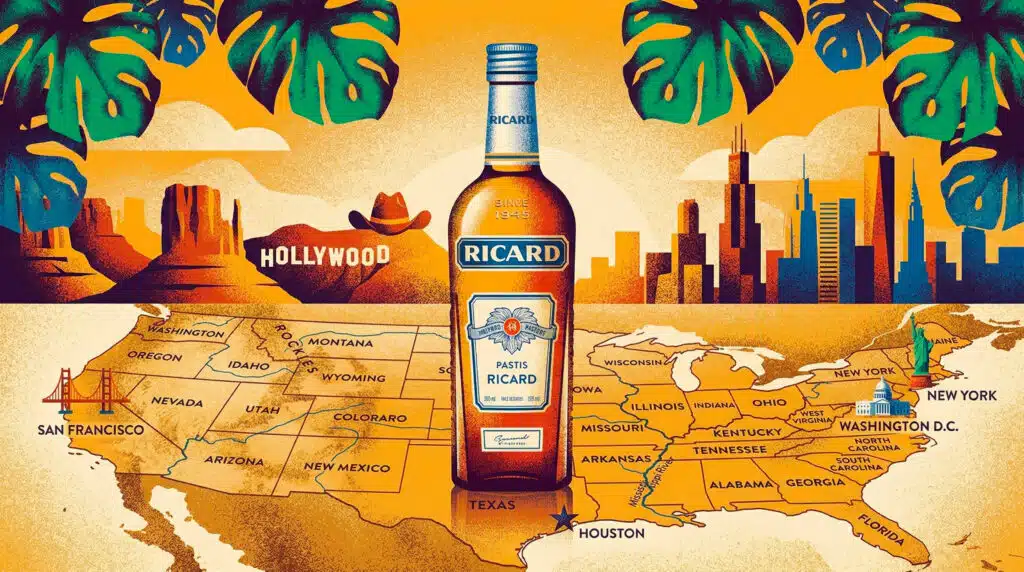
The second pillar of the industrial logic lies in geography. Pernod Ricard’s distribution network could help Brown-Forman conquer new markets, such as India, where the American group is currently little present. Pernod’s strong position in Indian whiskey could offer Jack Daniel’s a launchpad in this difficult-to-grasp market.
India is arguably the most underestimated stake in this merger. With a colossal whisky market by volume and a rapidly expanding middle class, it is the playground for spirits for the next half-century. Pernod has been established there for decades through its local brands (Imperial, Royal Stag) and its distribution network. Brown-Forman has only a marginal presence, despite the global prestige of Jack Daniel’s. A merger would offer American whiskey a launchpad that has been lacking for years.
A merger could also give Pernod’s current portfolio better access to the American market for cognac, wine, and Scotch whisky categories and, conversely, strengthen Brown-Forman’s position in gin, vodka, and Scotch whisky. Brown-Forman’s current geographical breakdown illustrates this dependence: the United States represents 44.4% of its revenue, far ahead of Mexico at 6.7% and Germany at 6.4%. A hyper-cyclical exposure profile in the American domestic market, where Pernod is paradoxically the weakest of the majors.
III. Scotch whisky: genuine complementarity, but regulatory competition to anticipate
On the surface, the Scotch portfolios are complementary. Pernod dominates premium blends (Ballantine’s, Chivas Regal, Royal Salute) and owns the single malt The Glenlivet, the leader in the super-premium category. Since 2016, Brown-Forman has built a single malt division through the acquisition of BenRiach, Glendronach, and Glenglassaugh, three distilleries in the Highlands and Speyside positioned in the artisanal high-end. At first glance, there are no direct overlaps.
But this beautiful theoretical complementarity will have to pass the filter of competition authorities. In certain key markets, the addition of the two scotch portfolios will create significant concentration. Such an operation would be costly and would sometimes lead the market to look for winners and losers. Brand divestitures might be required by regulators…
IV. Friction Points: Gin, Rum, Tequila
This is where the analysis gets complicated.
For gin, the merger creates a redundant portfolio in the same price segment. Malfy (Pernod) and Gin Mare (Brown-Forman) are both positioned in the Mediterranean lifestyle premium segment, with similar consumer selling prices and almost identical target markets in Southern Europe. Fords Gin, a bartender-oriented brand from Brown-Forman, directly competes with Pernod’s Monkey 47 offering. Two competing brands in the same segment within the same group represent marketing waste and an internal war among sales teams. Painful trade-offs will be inevitable.
The picture is similar for tequila. Olmeca (Pernod) and the Herradura / El Jimador family (Brown-Forman) have different price positioning (Herradura playing the premium, El Jimador the accessible, Olmeca the volume) but serve the same distribution channels and appeal to the same grocery store or bar buyers. A merger could elevate the combined tequila pole to fourth place in the US market, albeit with a market share still below 10%. Insufficient to compete with Jose Cuervo, Patrón, or Don Julio (Diageo). The question of divestiture will also arise almost mechanically.
Regarding rum, the situation is more favorable. Havana Club (Pernod) is a giant of Cuban rum, absent from the United States for geopolitical reasons. Diplomático (Brown-Forman) is a fast-growing, super-premium Venezuelan rum, positioned for consumption occasions and with a very different organoleptic profile. Complementarity outweighs competition.
V. Irish Whiskey: A Pernod Gem Threatened by Noise
Pernod’s portfolio includes Jameson Irish whiskey, and that’s an understatement. Jameson is the world’s best-selling Irish whiskey brand, with 11.2 million cases annually. Behind it, Powers and Redbreast form the second tier of a deep range covering all market positions. Brown-Forman owns Slane Irish Whiskey, a recent (2017) entrant still marginal in volume, launched with Mick Jagger’s blessing for its rock ‘n’ roll edge.
In theory, Slane is too small to create real conflict. Will Slane be condemned to stagnate or be sold? This is a painful management decision that will not resolve itself.
VI. The Financial Angle: Two Groups in Transformation
Beyond the portfolios, the balance sheet context deserves to be read without fatalism. Brown-Forman has a stock market capitalization of approximately 11 billion dollars, while Pernod Ricard’s exceeds 16 billion euros. These valuations are depressed by two years of a bearish cycle but offer precisely a rare window of opportunity: both groups can approach each other at historically attractive price levels, before the market regains strength.
Pernod Ricard has launched a restructuring plan aiming to achieve one billion euros in savings between 2026 and 2029. Far from being a red flag, this plan demonstrates proactive adaptability: the group enters negotiations with a cost base already undergoing streamlining, making post-merger synergies all the more credible in the short term. Pernod’s revenues amount to 11 billion euros in the last fiscal year, three times Brown-Forman’s turnover, confirming that the combined entity would possess unprecedented critical mass to absorb the operation’s debt and repay it within a reasonable timeframe.
On the American side, recovery signals are tangible. The Jack Daniel’s & Coca-Cola RTD has emerged as a strong addition to the portfolio, illustrating Brown-Forman’s ability to premiumize through innovation and partnerships. Net sales of the RTD portfolio increased by 8%, and emerging markets surged by 16%, all growth drivers that, supported by Pernod’s global distribution network, could accelerate significantly post-merger. The slowdown in tequila is real, but it is cyclical and affects the entire sector: Brown-Forman is not alone in this trough, and the consolidation of the two portfolios would precisely offer the resources to weather this cycle without damaging the brands.
Conclusion: Solid Industrial Logic, Complex Timing and Execution
The complementarity of the Pernod Ricard and Brown-Forman portfolios is real on the essentials: American whiskey (virtually absent from Pernod), distribution in emerging markets (virtually absent from Brown-Forman), and premium scotch and rum assets that reinforce each other without cannibalizing. Consolidation in the face of an industry slowdown makes sense, an argument that no one really disputes.
But the questions remain open, and there are many. Will European and American regulators accept such a concentration without demanding painful divestments of scotch or gin? Is Pernod Ricard in a position to take on massive debt for a transformative acquisition when it is itself under balance sheet pressure? And above all: is the Brown family, which has controlled its group from Louisville for over 150 years through a dual-class voting share system, truly ready to dilute its power in favor of a French publicly traded partner?
If the discussions are successful, the new group would become the only competitor capable of seriously challenging Diageo on a global scale. But is this the right time to attempt this merger? Or should it be seen as a rare opportunity: to build, at the bottom of the cycle, tomorrow’s global champion? The answer to this question will determine whether this merger goes down in history as an industry masterstroke, or as one merger too many.
Sources: Pernod Ricard press release of March 26, 2026 · Brown-Forman annual reports FY2026 · IWSR data · Reuters · Bloomberg · BFM Bourse · Boursorama