
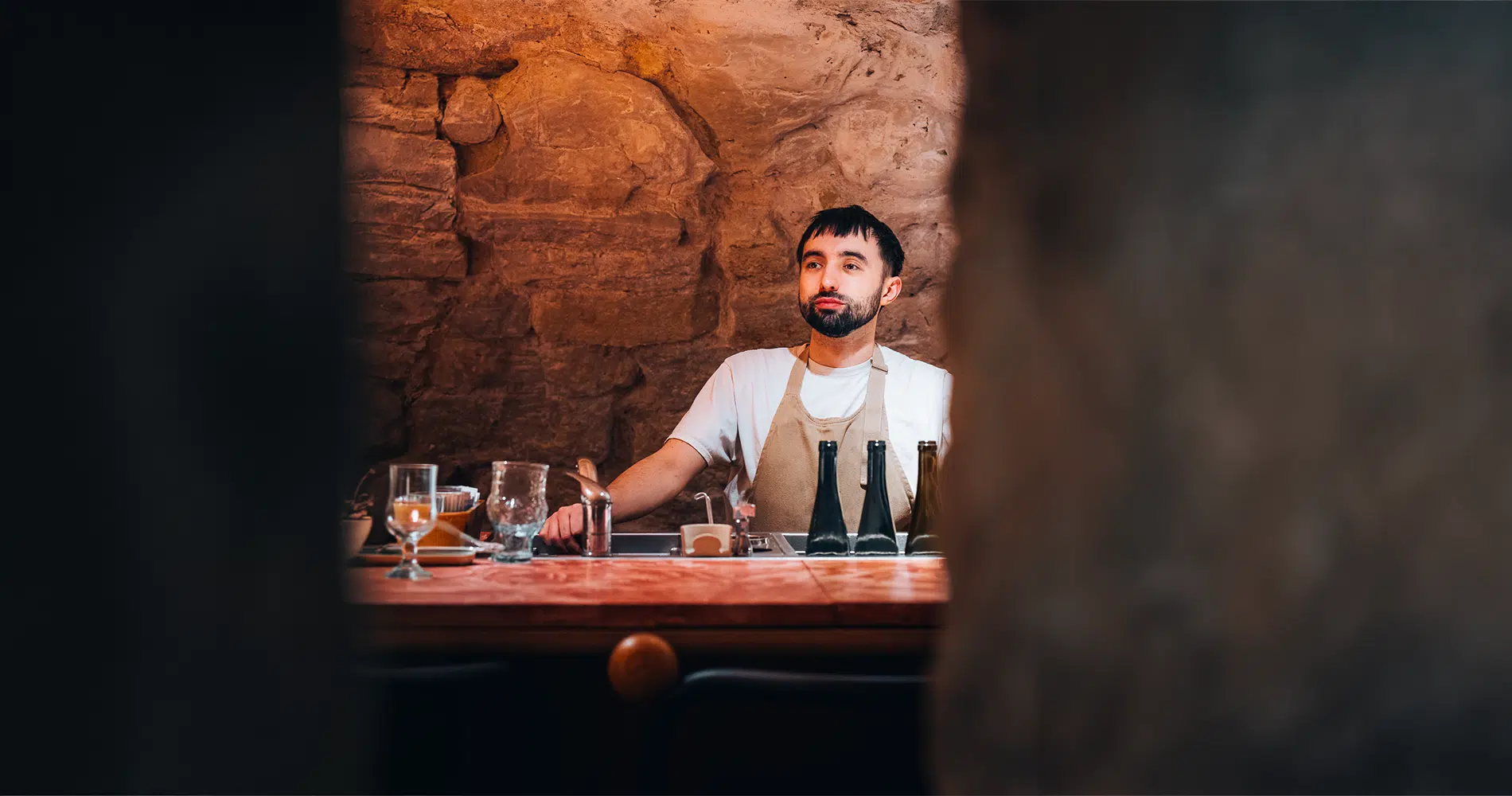
In the Montorgueil district, De Vie offers a radically modern vision of the cocktail bar. The venue combines a relaxed cellar, an experiential counter, a bar, and a production laboratory, conceived from the outset as a modular ecosystem. We had an appointment with Barney O'Kane (formerly of Little Red Door), who is at the helm of the establishment with Alex François, for a tour of the place (even going through the cold rooms) which champions a simple yet ambitious promise: everything is 100% French (products, glassware, sourcing). The only exception? The cosmopolitan team, composed of Irish, English, and Australians.
This approach becomes a genuine operational model: advanced seasonality, structured R&D, batch production, and service calibrated by weight, just like in the kitchen.
A space designed as a tool, not as decor
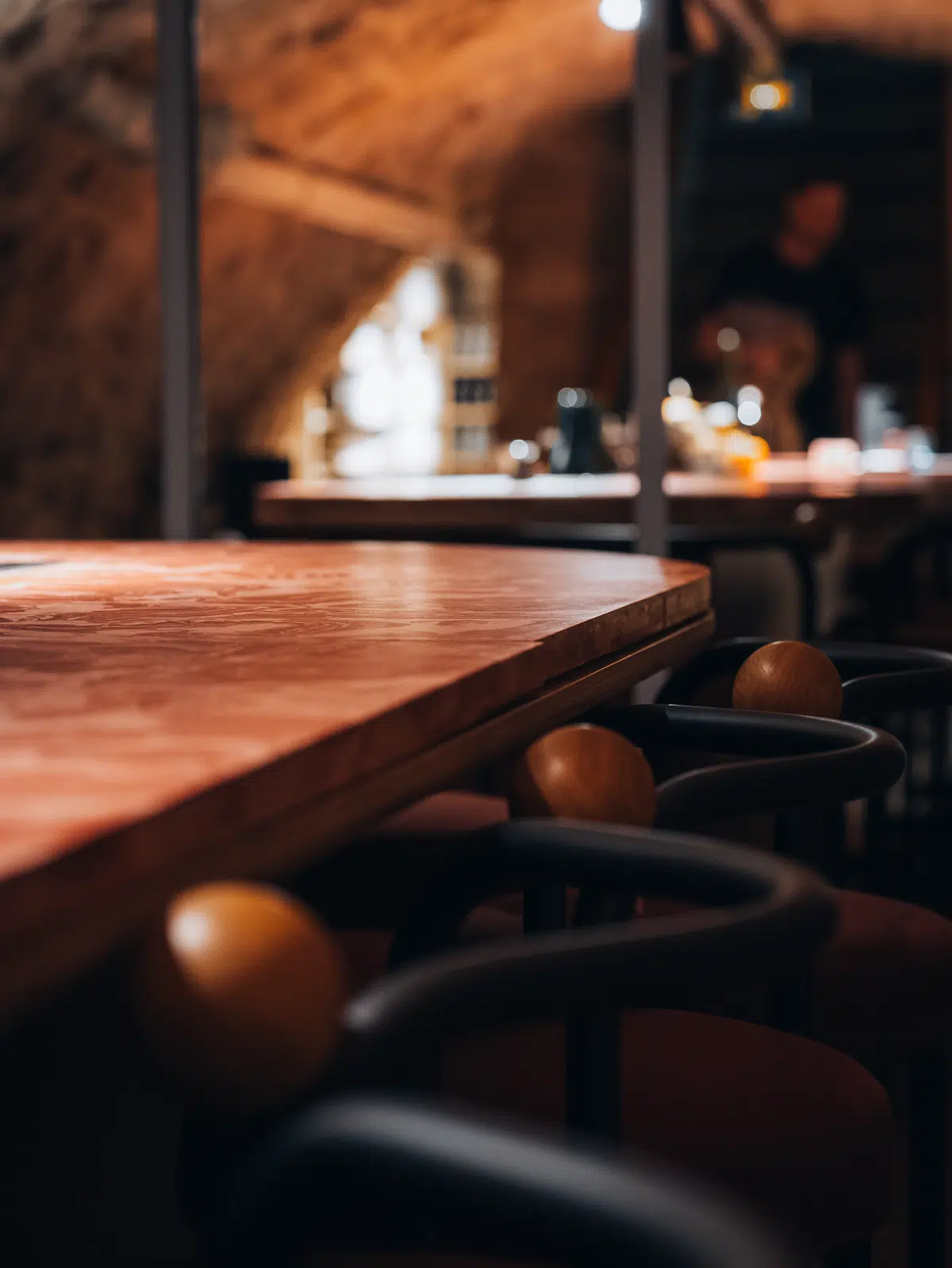
De Vie is not a speakeasy, but you have to descend a few steps to discover the bar area, entering a deliberately intimate atmosphere, without falling into ostentatious luxury. This configuration responds to a clear strategy: segmenting uses and adapting to individual expectations.
The cellar serves as an accessible entrance for local and walk-in customers. People come here for a glass of wine, a beer, or a bottled cocktail, just as they would choose a wine.
The counter offers a complete immersive and gustatory experience: a 2h to 2h30 "tasting", in direct interaction with the teams.
The bar functions like a cocktail bar: the menu changes daily based on arrivals and counter needs.
This organization into three spaces is not just scenography, it's a management method. Barney O'Kane explains it clearly: “the team adjusts the level of explanation and the intensity of the experience according to the group's profile. A customizable experience, without ever imposing the concept”.
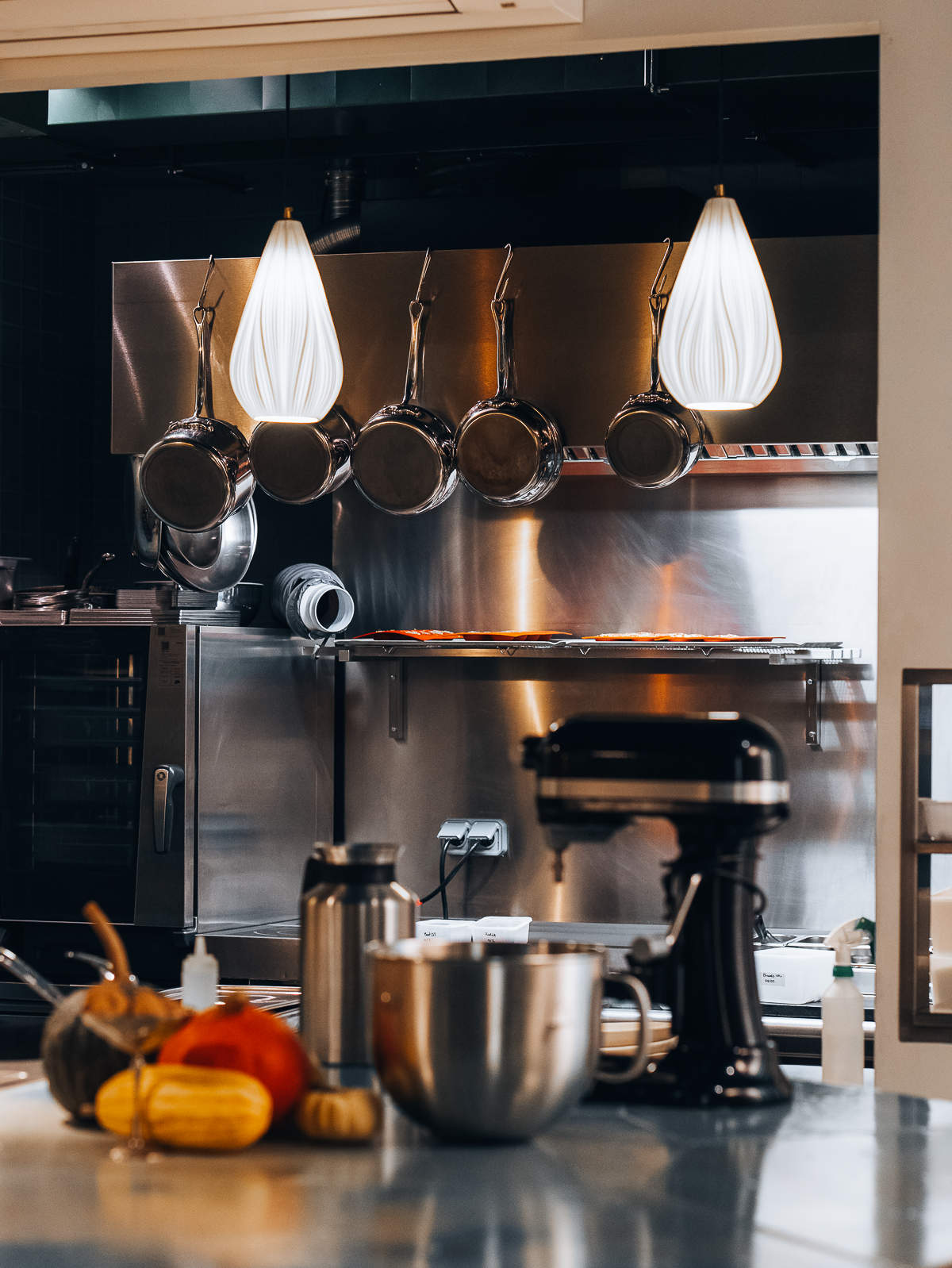
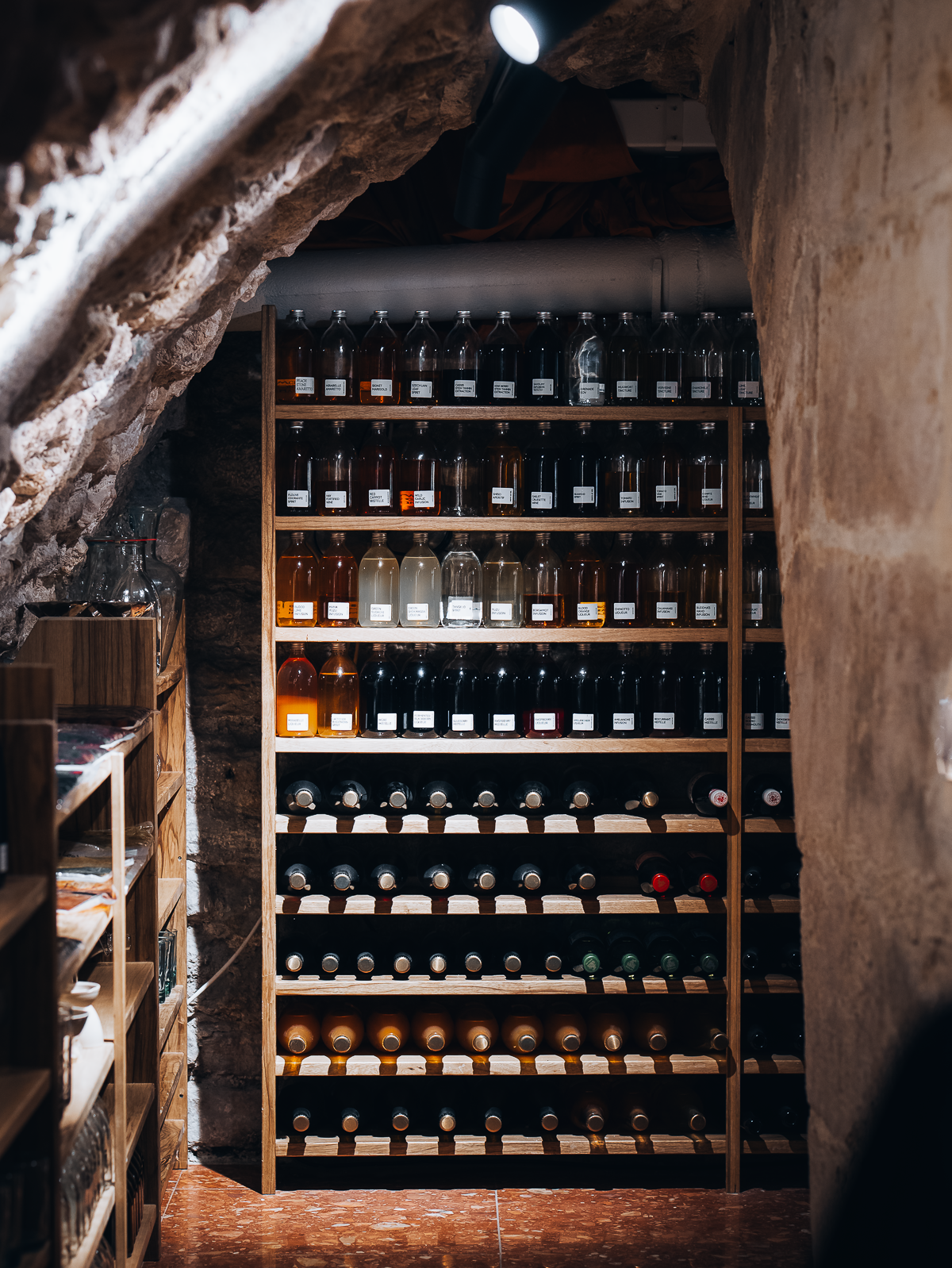
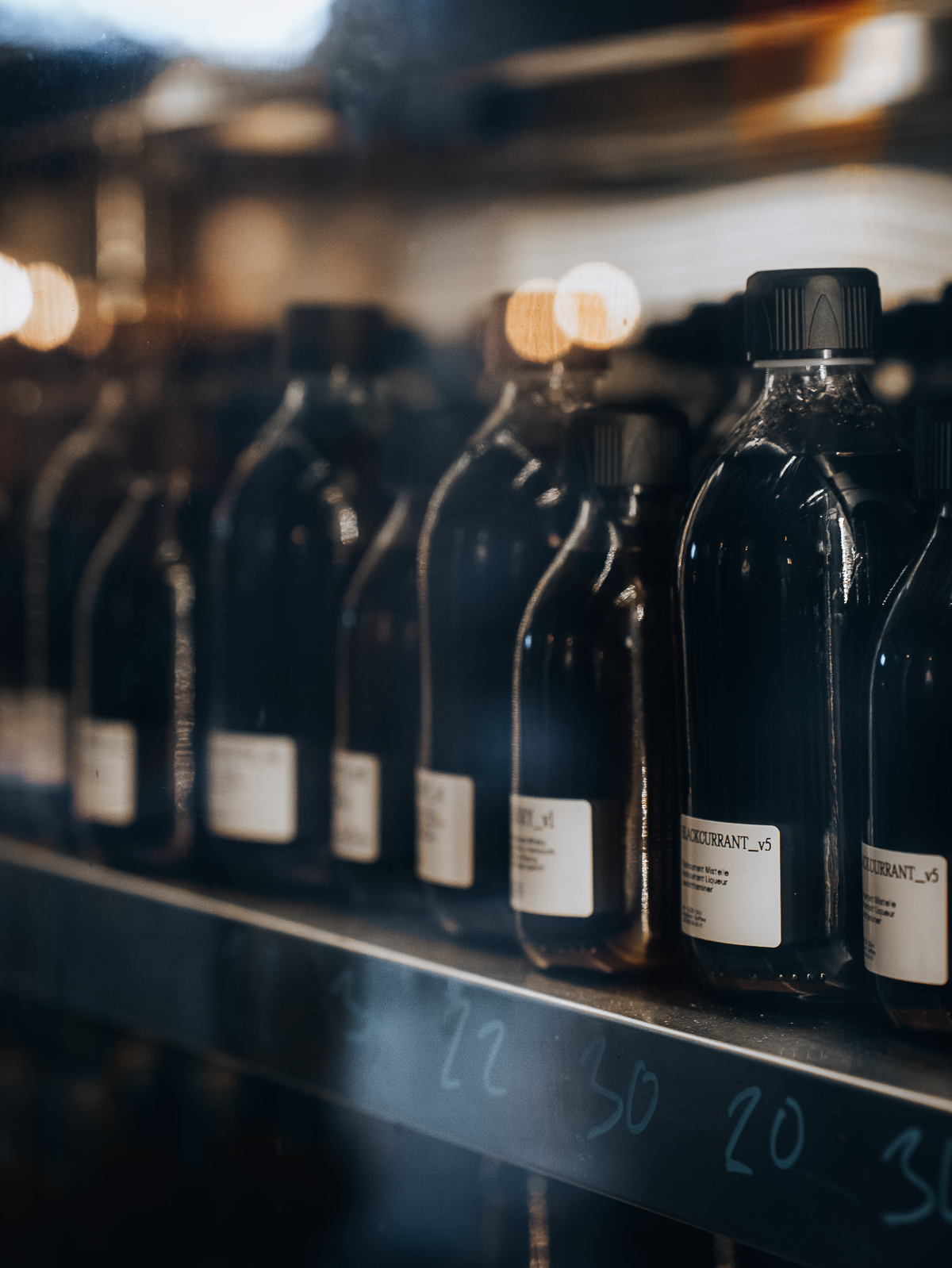
The anti "backbar": when the fridge replaces the wall of bottles
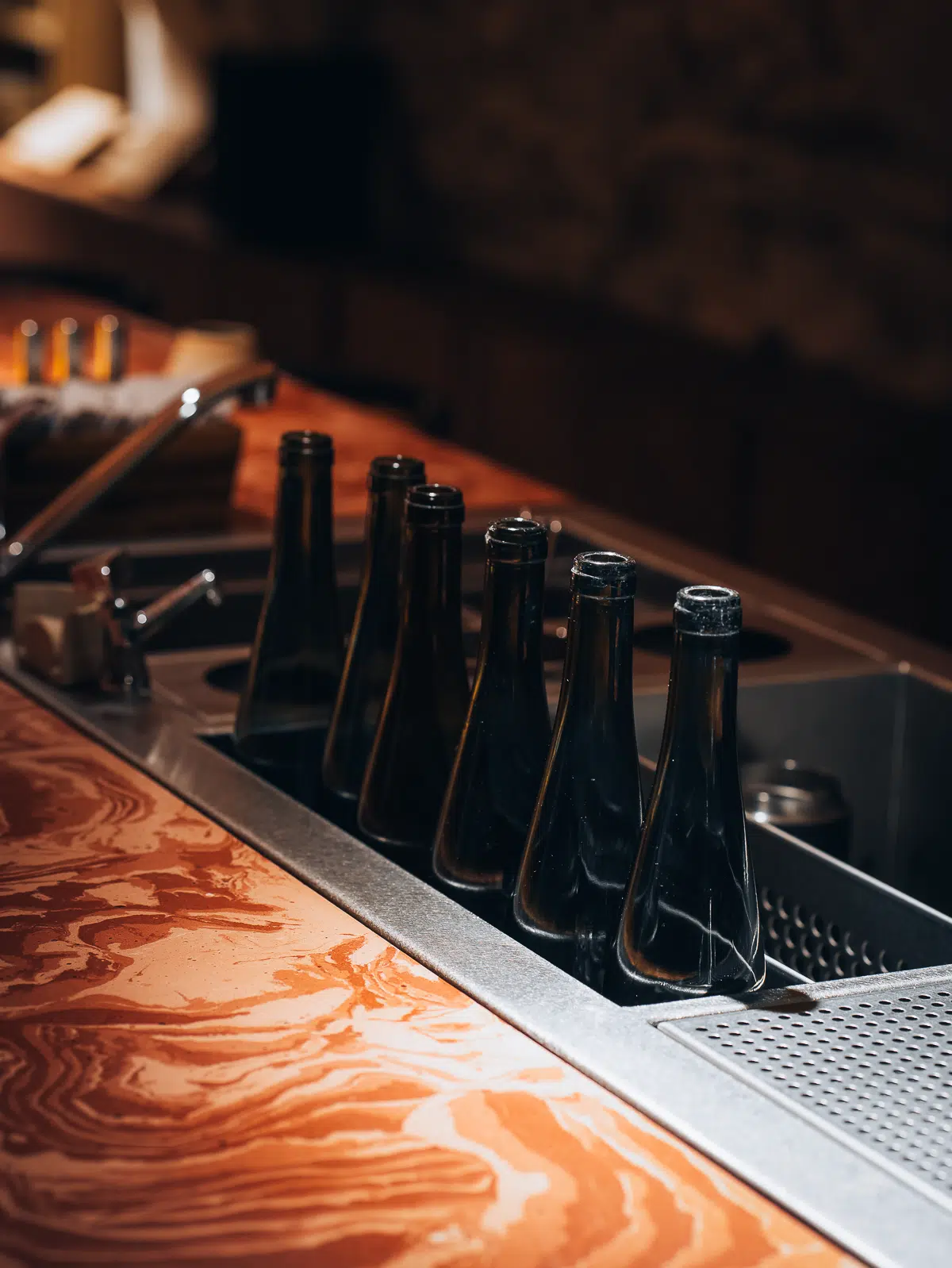
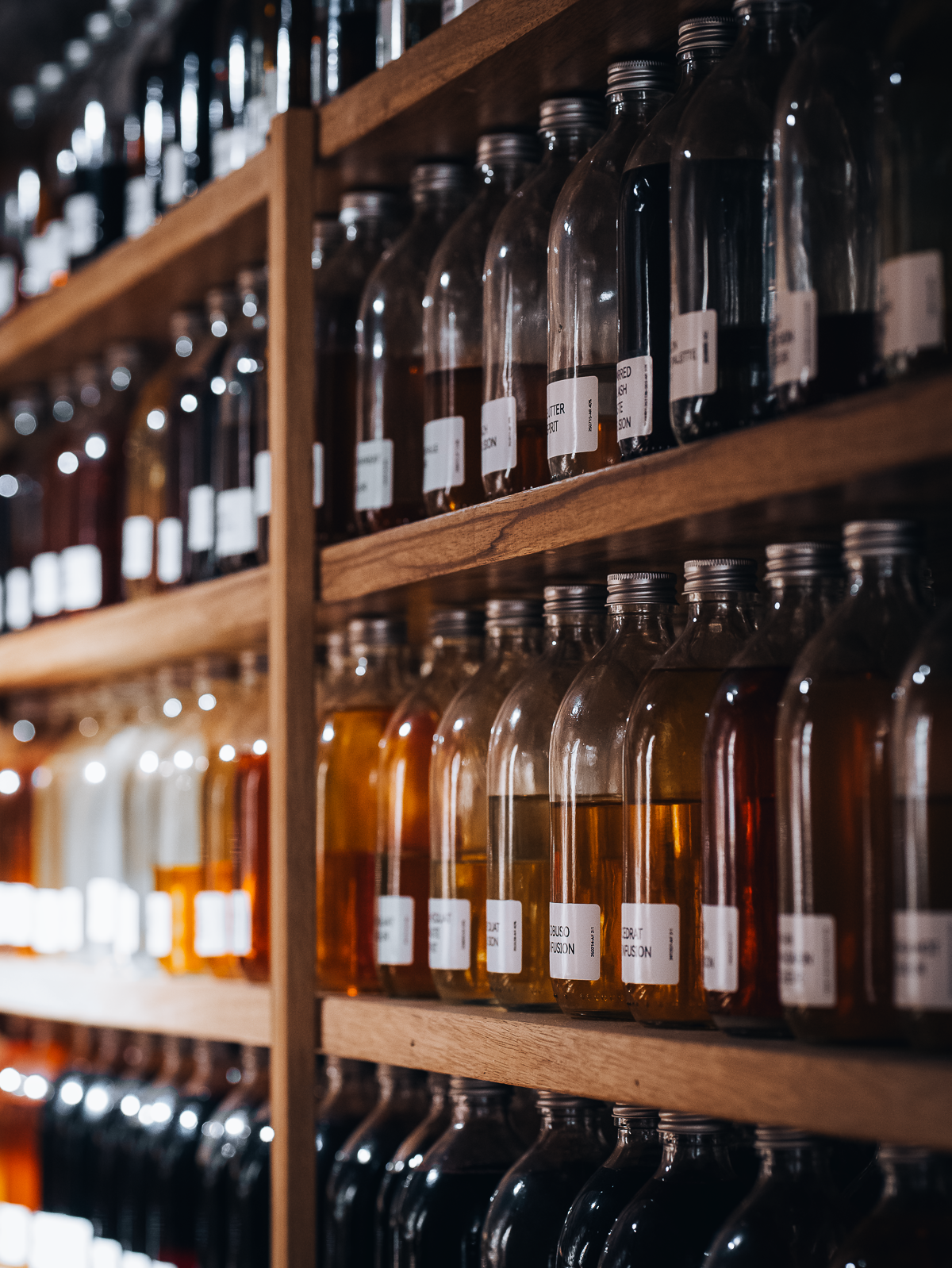
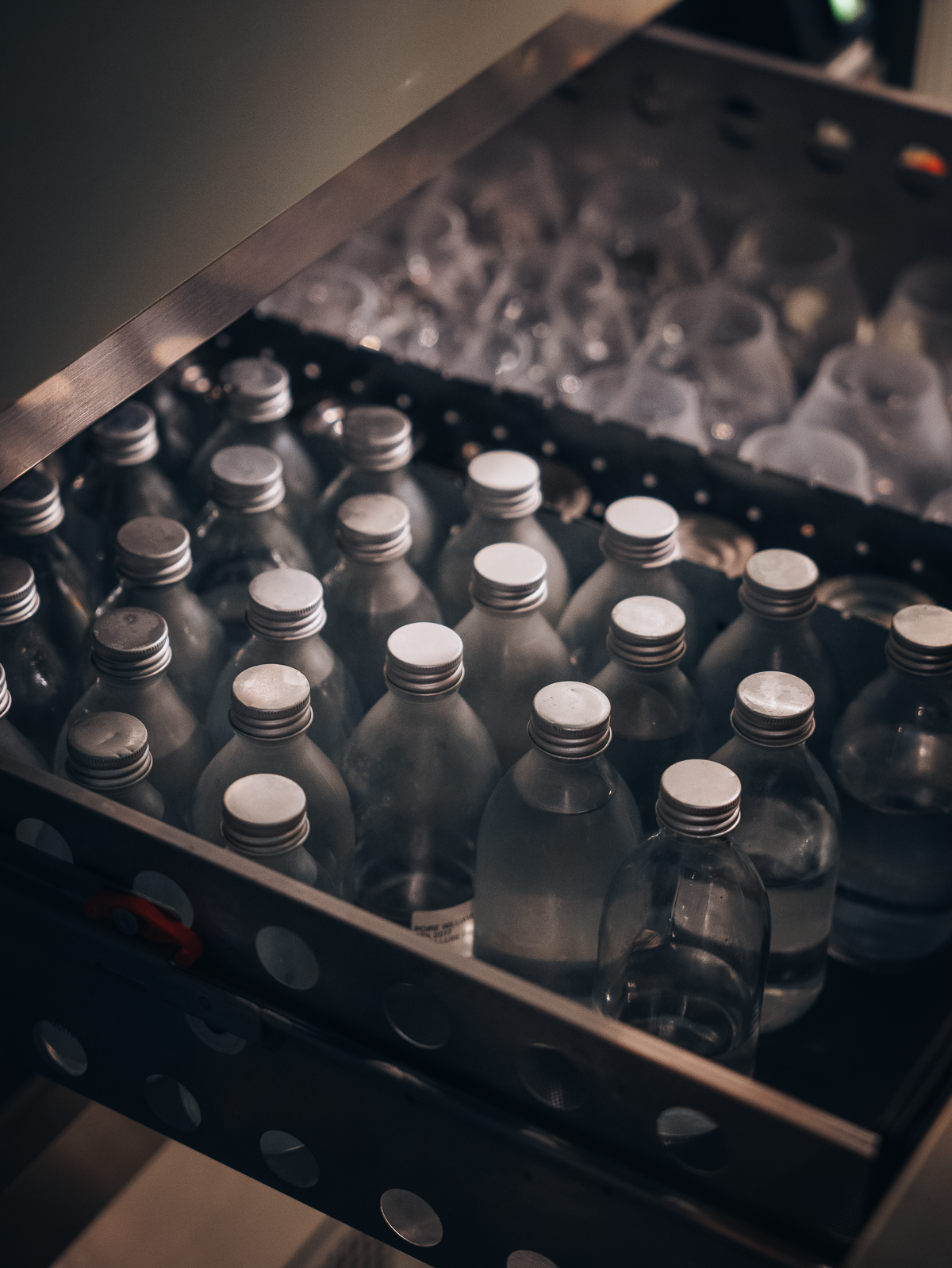
At De Vie, there is no wall of bottles behind the bartender. Everything is kept cool, at the right serving temperature, and already pre-batched. The station is no longer a theatre of bottles, but a space for execution and conversation.
The benefits are immediate: speed of service (we open a batch, test it, adjust it), consistency in the result (fewer human variables), and above all, more relational time with customers. The bartender can finally turn to the room, build connections, and create dynamics.
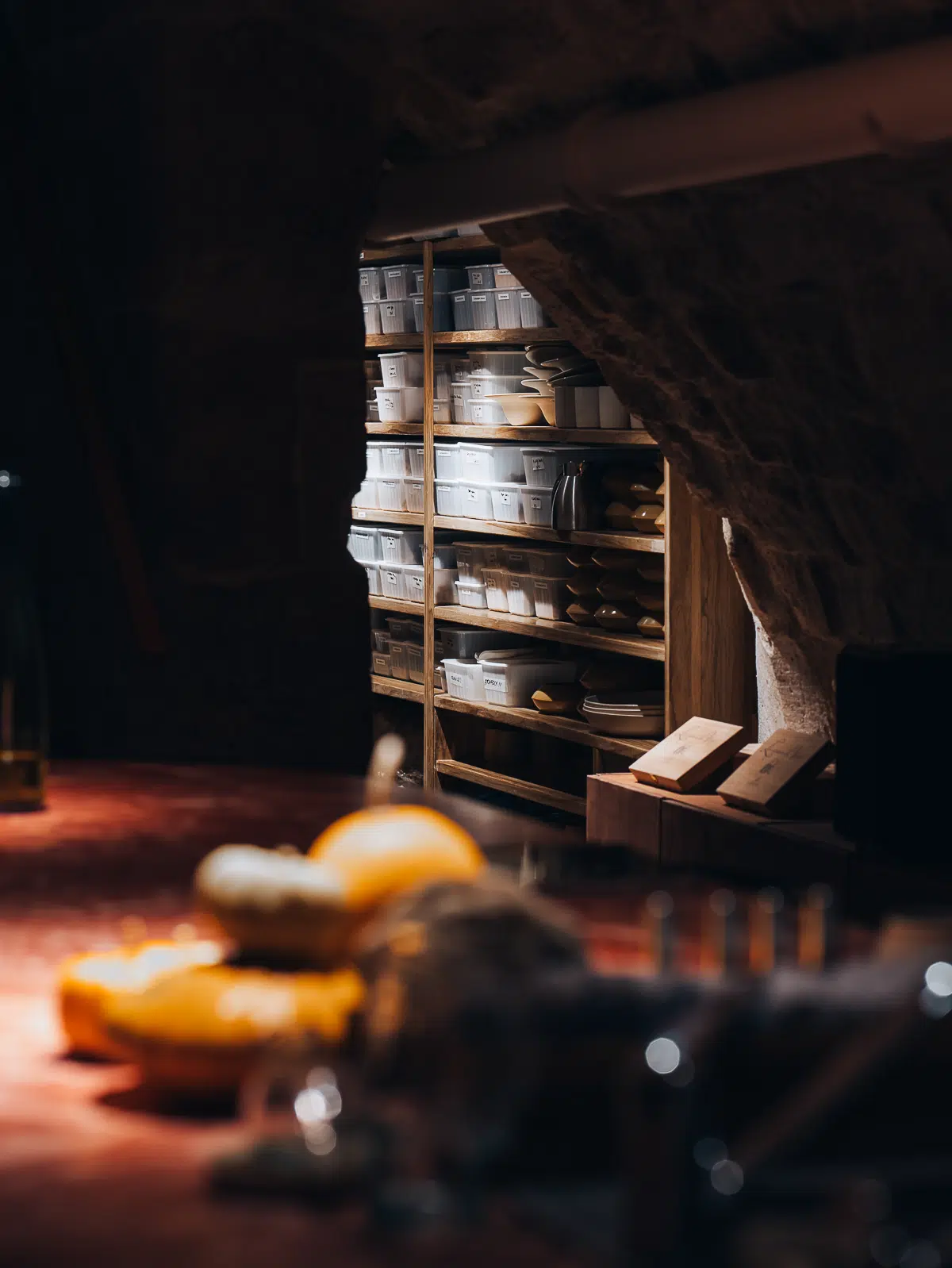
It is also a strong identity choice. Customers see the pantry, the storage, the laboratory, elements usually hidden. This "show don't tell" effect conveys the approach without superfluous discourse.
A menu that evolves out of necessity, not by calendar
The promise is not "a menu that changes every month", but rather "a menu that evolves when necessary". When a product is depleted, when a batch is finished, when a season changes, the cocktail disappears from the menu.
Logic is embraced. Some cocktails are based on spirits produced in limited quantities, like this bell pepper spirit aged in a toasted barrel, only 100 liters, "when it's gone, it's gone". The very structure of the offering depends on product opportunities: mirabelle plum, raspberry, rare citrus. Winter imposes a different writing (kiwi, beetroot, citrus), which also influences the coherence between cuisine and cocktails.
De Vie transforms this constraint into desirability. Rarity becomes an argument, seasonality a guiding principle.
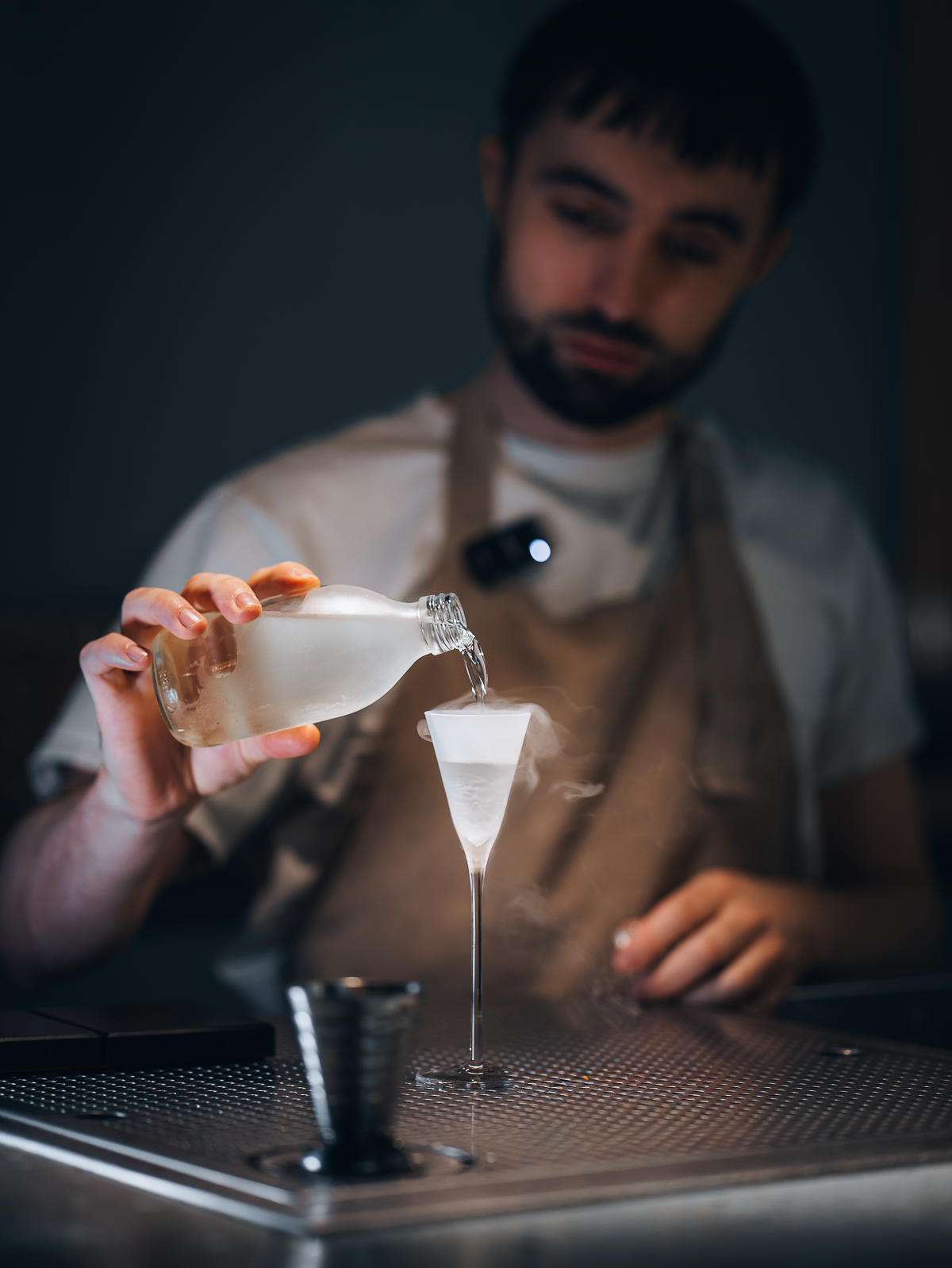
The cocktail pairing, the establishment's economic engine
This is De Vie's differentiating heart: cocktail pairing elevated to the level of a tasting menu, with liquid pairings that are not always classic cocktails (juices, pickles, hybrid formats).
Managing alcohol risk through experience design
Barney insists on a point often underestimated: a cocktail pairing is intimidating. Seven cocktails, that's daunting. The construction therefore involves low ABV at the beginning of the journey, adapted volumes (9 cl at 12% for a "blackcurrant wine"), and miniaturized "strong serves" (15 to 25 ml) on an oyster shell rinsed with cocktail. The pairing becomes an architecture of consumption, not a simple addition of glasses.
Non-alcoholic options treated equally
Non-alcoholic pairing is not a watered-down version. It's the same menu, the same drama, with or without alcohol. An obvious lever in 2026: converting "Dry January" into a sustainable opportunity, and broadening the target audience (corporate, international, premium casual).
The scale at the bar: precision and fairness
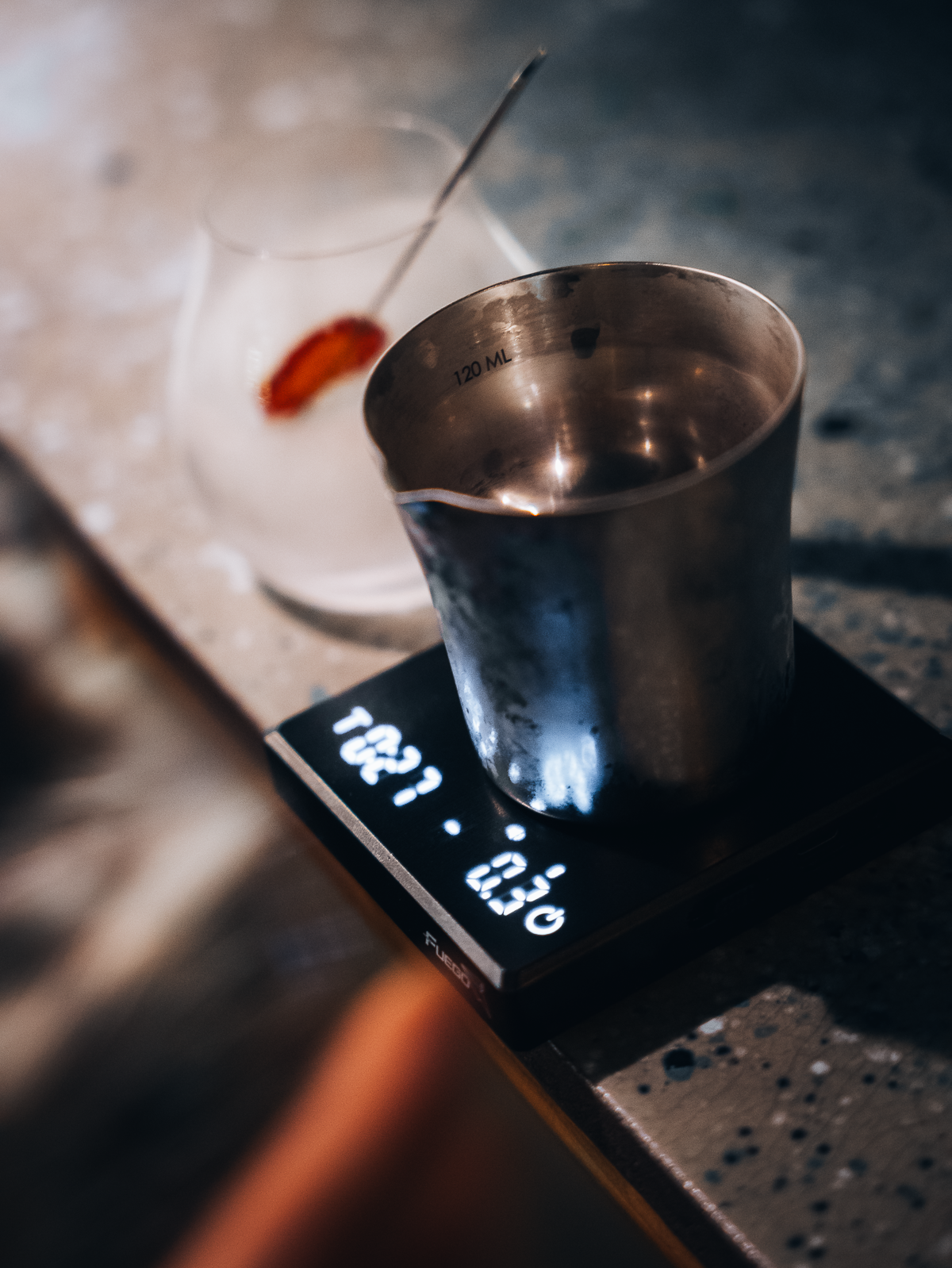
The image is striking: cocktails are measured on a scale. The reason? Fairness. On an unusual service (oyster shell, non-standardized artisanal glassware), the scale guarantees that everyone pays the same price for the same quantity.
In addition to this, there is product consistency: 100% French mouth-blown glassware, various ceramics, and a garnish logic designed to be useful. "Garnish is delicious, that's the goal," summarizes O'Kane.
This setup tells a very operational story: De Vie does not seek Instagrammable effects at the expense of control. It aims for precision, in service of a place that remains accessible and friendly.
Sourcing: the strength of long-term relationships
De Vie operates on a relational model built over several years, inherited from "Farm to Glass" methods. Barney cites producers they've worked with for 5 or 6 years, who supply them with rare citrus fruits and saffron, and describes a virtuous cycle based on trust, consistency, and reciprocity.
Structured R&D
Macerations, distillations, fermentations, texture tests using eau-de-vie bases (pear, apple, grape, beetroot). The deliberate choice? Not to "over-technicize" if the initial flavor needs to remain clear.
Reference Library
De Vie systematically keeps 500 ml of each finished batch, with technical sheets. Objective: to be able to reconstruct a season and secure volume gains. "If you have 100 kilos of blackcurrants, we are ready," explains Barney.
For professionals, this is crucial: creativity is supported here by production memory, and thus by a form of artisanal scalability.
Zero waste: a cost converted into value
The ecological discourse is concrete. We don't throw away, we reuse a product two or three times: fermentation, then maceration, then distillate or mistelle. It's virtuous, but it raises a real issue: costing.
Barney acknowledges the difficulty of calculating the cost of a cocktail when working in bulk and with multiple transformations. The response is pragmatic: summer (July-August) is a "quiet" period for Paris but rich in raw materials. It therefore becomes the production and storage season. Objective: to smooth out the months of November to February, when the supply of fresh products becomes scarce.
De Vie operates like a gourmet cannery: capitalize in season to secure out of season.
An assumed business, without sacrificing the editorial line
De Vie does not hide behind the romanticism of the pure concept. Barney openly discusses rankings (50 Best Bars Europe, etc.) and their impact. Entering a ranking can create a jump in turnover of 25% to 35% in 24 hours, according to his experience.
But he immediately nuances: this is not the daily objective. The team does not "change a thing" day-to-day to chase after a guide. It is a mature positioning: exigence to last, and rewards as accelerators, not as a compass.
What De Vie changes for bar professionals
De Vie is not just a new Parisian bar. It is a case study that embodies several key trends in the sector.
The bar becomes a kitchen: pre-batching, weighing, preparation, precision, calibrated service. Seasonality transforms into an economic model thanks to storage, product library, and planning. Cocktail pairing becomes normalized through low ABV, controlled volumes, and equivalent non-alcoholic options. The experience is personalized without imposing a conceptual discourse. Storytelling is done through operational architecture: the fridge, the lab, the pantry are shown. We don't tell, we show.
Deep down, De Vie embraces a rare idea: industrializing artisanal quality, not by standardizing it, but by organizing it. And this is precisely what makes it a particularly interesting destination for industry professionals: bars, groups, hoteliers, producers, and brands looking to understand concretely what the next step in contemporary cocktails looks like.
